Magnetic Induction Heating Device Market Size, Share, Growth & Forecast to 2035

Introduction

The global Magnetic Induction Heating Device Market is experiencing steady growth as industries shift toward energy-efficient, precise, and sustainable heating technologies. With increasing demand across manufacturing, automotive, electronics, and metal processing industries, induction heating devices are becoming a preferred alternative to traditional heating systems.

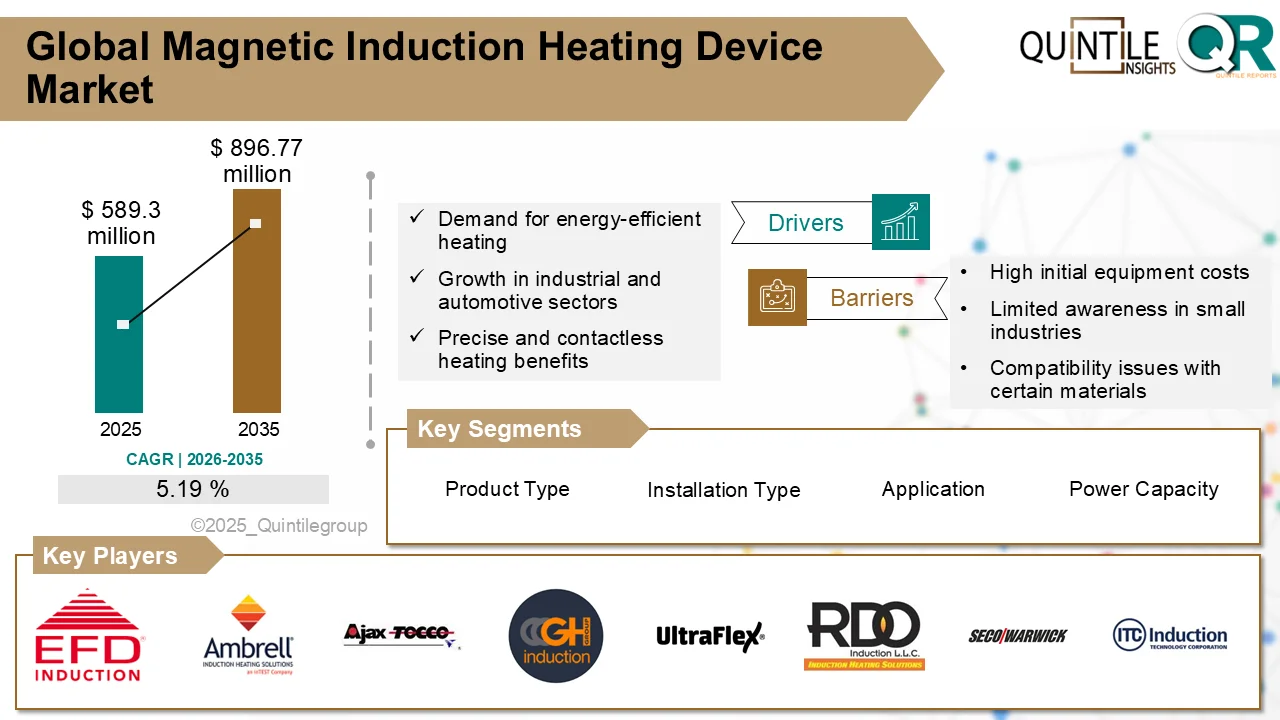
The market was valued at USD 589.3 million in 2025 and is projected to reach USD 896.77 million by 2035, expanding at a CAGR of 5.19% during the forecast period (2026–2035). This growth reflects rising industrial automation and the need for advanced heating solutions.

Download a Free Sample Report to explore key insights and market data trends : https://www.quintilereports.com/request-sample/1281-magnetic-induction-heating-device-market/

What is a Magnetic Induction Heating Device?

A magnetic induction heating device uses electromagnetic fields to heat conductive materials without direct contact. This process ensures:

  • Rapid and uniform heating
  • High energy efficiency
  • Reduced heat loss
  • Enhanced safety and control

These benefits make induction heating systems ideal for modern industrial applications.

Market Dynamics

Key Growth Drivers

1. Increasing Demand for Energy-Efficient Solutions

Industries are focusing on reducing energy consumption and operational costs. Induction heating technology offers a clean and efficient alternative to conventional heating methods.

2. Expansion of Manufacturing Industries

Rapid industrialization and increasing production activities are driving demand for industrial heating equipment, especially in emerging economies.

3. Growth in Automotive and Electronics Sectors

Induction heating is widely used in processes such as welding, brazing, and heat treatment, particularly in automotive and electronics manufacturing.

4. Technological Advancements

Innovations in high-frequency induction heating systems and smart automation are further boosting market growth.

Latest Blog : https://www.researcheditorial.com/news/autonomous-firefighting-drones-market/

Market Restraints

  • High initial installation costs
  • Technical complexity
  • Limited awareness in developing regions

Despite these challenges, ongoing advancements are expected to improve accessibility and adoption.

Emerging Opportunities

Integration with Industry 4.0

Smart factories are increasingly adopting IoT-enabled induction heating systems, creating new opportunities for automation and efficiency.

Growth in Renewable Energy Sector

Induction heating devices are used in manufacturing components for renewable energy systems, expanding their application scope.

Expansion in Emerging Markets

Countries in Asia-Pacific and Latin America are witnessing rapid industrial growth, offering untapped market potential.

LinkedIn Article : https://www.linkedin.com/pulse/magnetic-induction-heating-device-market-size-share-growth-narayan-v1axe

Market Segmentation

By Product Type

  • Portable Induction Heating Devices
  • Stationary Induction Heating Systems

By Application

  • Metal Processing
  • Automotive Industry
  • Electronics Manufacturing
  • Aerospace
  • Others

By Region

  • North America
  • Europe
  • Asia-Pacific
  • Latin America
  • Middle East & Africa

Asia-Pacific dominates the market due to strong manufacturing growth and increasing investments in industrial automation.

Competitive Landscape

The Magnetic Induction Heating Device Market is highly competitive, with key players focusing on:

  • Product innovation
  • Strategic partnerships
  • Expansion into emerging markets
  • Research and development

Companies are continuously enhancing their product offerings to gain a competitive edge.

Future Outlook

The future of the market looks promising as industries continue to adopt efficient and sustainable heating technologies. Key trends shaping the future include:

  • Increased automation in industrial processes
  • Growing demand for precision heating
  • Strong emphasis on sustainability
  • Continuous technological advancements

By 2035, induction heating is expected to become a standard industrial heating solution worldwide.

Frequently Asked Questions (FAQs)

1. What is a Magnetic Induction Heating Device?

A magnetic induction heating device is a system that uses electromagnetic fields to heat conductive materials without direct contact, ensuring fast, efficient, and precise heating.

2. How does induction heating technology work?

Induction heating works by generating an alternating magnetic field that induces electric currents within a metal object, producing heat due to resistance.

3. What are the advantages of induction heating devices?

Key benefits include high energy efficiency, rapid heating, precise temperature control, improved safety, and reduced environmental impact compared to traditional heating methods.

4. Which industries use magnetic induction heating devices?

Industries such as automotive, aerospace, electronics, metal processing, and manufacturing widely use induction heating technology.

5. Why is the Magnetic Induction Heating Device Market growing?

The market is growing due to increasing demand for energy-efficient solutions, rising industrial automation, and expanding manufacturing sectors globally.

6. What are the key applications of induction heating?

Common applications include welding, brazing, heat treatment, melting, and surface hardening of metals.

7. Which region dominates the market?

Asia-Pacific dominates the market due to rapid industrialization and strong manufacturing growth.

8. What challenges does the market face?

Challenges include high initial investment costs, technical complexity, and limited awareness in developing regions.

Conclusion

The Magnetic Induction Heating Device Market is on a steady growth trajectory, driven by technological advancements and increasing industrial demand. With a projected market size of USD 896.77 million by 2035, businesses have significant opportunities to capitalize on this evolving landscape.

Get Detailed Market Insights

👉 Access in-depth analysis, forecasts, and competitive intelligence
👉 Identify growth opportunities and emerging trends

Download Your FREE Sample Report Now : https://www.quintilereports.com/request-sample/1281-magnetic-induction-heating-device-market/

Let’s Discuss

What’s your perspective on the future of induction heating technology?

Share your thoughts in the comments below!

Industrial Knitting Equipment Market Size, Share & Forecast 2035: Trends Driving 4.39% CAGR Growth

Introduction

The global Industrial Knitting Equipment Market is emerging as a vital component of the modern textile manufacturing ecosystem, driven by the growing need for efficiency, precision, and scalability in fabric production. As industries continue to evolve, manufacturers are increasingly adopting advanced knitting technologies to meet the rising demand for high-quality textiles across apparel, technical, and industrial applications.

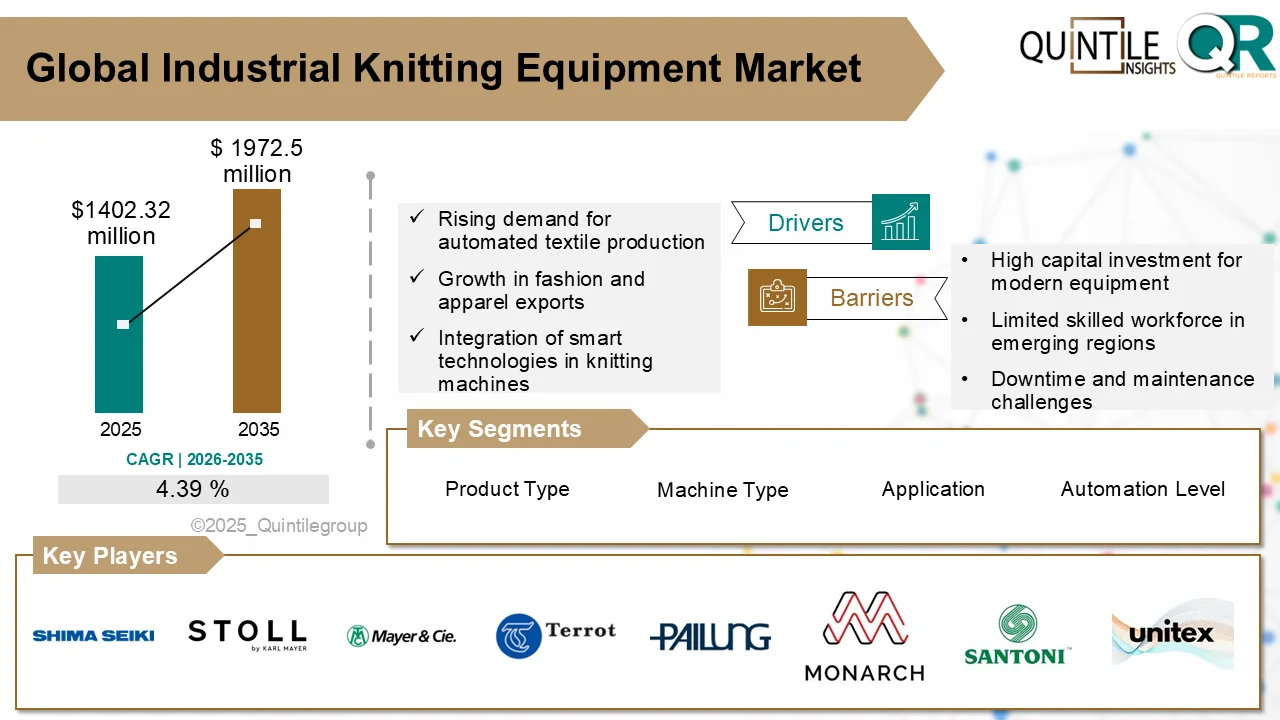
In 2025, the market was valued at USD 1,402.32 million and is projected to reach USD 1,972.5 million by 2035, expanding at a steady CAGR of 4.39% during the forecast period. This growth reflects the broader transformation of the textile industry, where automation, digitalization, and sustainability are becoming central to production strategies.

Industrial knitting equipment plays a crucial role in producing a wide range of fabrics, from everyday garments to specialized materials used in automotive, healthcare, and construction sectors. Unlike traditional weaving methods, knitting offers enhanced flexibility, comfort, and design versatility, making it a preferred choice for manufacturers worldwide.

Download Free Sample PDF of the Report : https://www.quintilereports.com/request-sample/1284-industrial-knitting-equipment-market/

Market Overview

Industrial knitting equipment refers to advanced machinery used to produce knitted fabrics through automated or semi-automated processes. These machines are essential in large-scale textile production, enabling manufacturers to achieve high-speed output with consistent quality.

With the increasing demand for mass production and customization, manufacturers are shifting toward computerized knitting machines that allow complex designs and patterns with minimal manual intervention. This shift is significantly improving productivity and reducing operational costs.

Key Market Drivers

1. Rising Demand for Technical Textiles

Technical textiles are designed for functionality and performance rather than aesthetics. They are widely used in industries such as automotive, healthcare, construction, and defense. The need for durable and specialized fabrics is driving the demand for advanced knitting equipment.

2. Automation and Smart Manufacturing

The adoption of automation in textile manufacturing is transforming the industry. Modern knitting machines equipped with IoT and AI technologies enable real-time monitoring, predictive maintenance, and improved efficiency.

3. Growth of the Apparel Industry

The global apparel sector continues to expand due to rising population, urbanization, and changing fashion trends. Knitted fabrics are highly preferred for their comfort and flexibility, boosting the demand for knitting machinery.

4. Sustainability and Eco-Friendly Production

Environmental concerns are encouraging manufacturers to adopt sustainable practices. Advanced knitting equipment helps reduce material waste and energy consumption while supporting eco-friendly production.

Emerging Trends

✔ Smart Knitting Machines

Integration of digital technologies is enhancing machine performance and operational efficiency.

✔ Seamless Knitting Technology

Seamless knitting reduces fabric waste and production time while improving garment quality.

✔ Customization and Personalization

Consumers are increasingly demanding personalized products, driving innovation in knitting technologies.

✔ Digital Transformation

Software-driven systems are enabling better control, design flexibility, and faster production cycles.

Latest Blog : https://www.researcheditorial.com/news/process-chillers-market/

Regional Insights

Asia-Pacific

Asia-Pacific dominates the Industrial Knitting Equipment Market due to strong textile manufacturing hubs in countries like China, India, and Bangladesh. The region benefits from low production costs and high export demand.

Europe

Europe is known for its advanced textile machinery and focus on sustainable manufacturing practices.

North America

North America is witnessing steady growth driven by technological advancements and demand for technical textiles.

Market Segmentation

By Type:

  • Circular Knitting Machines
  • Flat Knitting Machines
  • Warp Knitting Machines

By Application:

  • Apparel
  • Technical Textiles
  • Home Textiles
  • Industrial Applications

Key Players Operating in the Industrial Knitting Equipment Market Include:

  • Mayer & Cie. GmbH & Co. KG
  • Terrot GmbH
  • Fukuhara Industrial & Trading Co., Ltd.
  • Quanzhou Baiyuan Machinery Science & Technology Co., Ltd.
  • Orizio S.r.l.
  • Pailung Machinery Mill Co., Ltd.

For More Information or Query, Visit @https://www.quintilereports.com/industry-report/1284-industrial-knitting-equipment-market/

Competitive Landscape

The market is highly competitive, with companies focusing on innovation, product development, and strategic partnerships. Investment in research and development is a key strategy adopted by leading players to stay ahead in the market.

Challenges

  • High initial investment costs
  • Shortage of skilled labor
  • Fluctuating raw material prices
  • Supply chain disruptions

These challenges may impact market growth but also open opportunities for innovation and efficiency improvements.

Future Outlook

The future of the Industrial Knitting Equipment Market lies in automation, digitalization, and sustainability. Emerging technologies such as AI-driven machinery, 3D knitting, and smart factories are expected to revolutionize textile manufacturing.

As industries continue to demand high-performance and eco-friendly fabrics, the adoption of advanced knitting equipment will accelerate, ensuring steady market growth through 2035.

Frequently Asked Questions (FAQs)

Q1. What is the market size in 2025?
The market was valued at USD 1,402.32 million in 2025.

Q2. What is the expected market size by 2035?
The market is projected to reach USD 1,972.5 million by 2035.

Q3. What is the CAGR during the forecast period?
The market is expected to grow at a CAGR of 4.39%.

Q4. Which region dominates the market?
Asia-Pacific holds the largest market share.

Read More

👉 Also read our detailed LinkedIn article for expert insights:
https://www.linkedin.com/pulse/industrial-knitting-equipment-market-reach-usd-19725-million-narayan-wt7gf

APAC: +91-626-560-6898

US: +91 866-833-9034

Email: sales@quintilereports.com

Website: https://www.quintilereports.com/

Bin Picking System Market to Reach $7.71 Billion by 2035: How AI and Robotics Are Revolutionizing Manufacturing

Introduction

The global manufacturing industry is undergoing a massive transformation fueled by automation, artificial intelligence (AI), and robotics. Among the technologies driving this revolution, bin picking systems have emerged as a game-changing solution. These robotic systems can automatically pick and handle objects from bins or containers, even when they are randomly placed, enabling manufacturers to automate tasks that were previously labor-intensive.

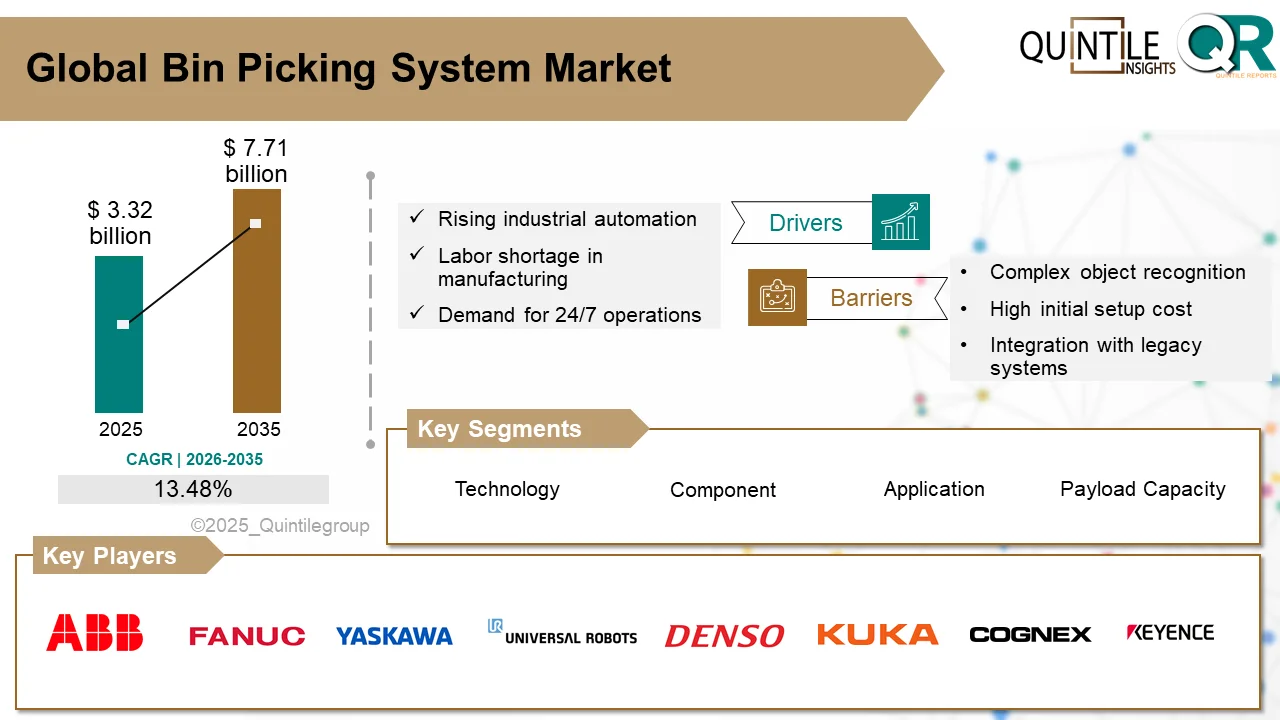
According to recent research, the Global Bin Picking System Market was valued at USD 3.32 billion in 2025 and is projected to reach USD 7.71 billion by 2035, growing at a robust CAGR of 13.48% during the forecast period. This remarkable growth reflects the rising adoption of smart factories, AI-driven robotics, and industrial automation across the globe.

In this comprehensive blog, we explore:

  • What bin picking systems are
  • Key drivers of market growth
  • Industry applications
  • Regional insights
  • Market trends
  • Challenges and opportunities
  • Future outlook

Request a Complimentary Sample Report Before Purchase to evaluate detailed segmentation and regional outlook : https://www.quintilereports.com/request-sample/1222-bin-picking-system-market/

What Are Bin Picking Systems?

A bin picking system is an advanced automation technology that allows robots to pick objects from bins, boxes, or containers without human intervention.

How They Work

Traditional robots require objects to be pre-arranged in fixed positions. Bin picking systems eliminate this limitation using 3D vision, AI, machine learning, and sensors to detect the shape, orientation, and position of objects. The system then guides a robotic arm to pick and place objects with high precision.

Core Components of a Bin Picking System:

  1. Industrial Robotic Arms – For automated handling and placement
  2. 3D Vision Cameras – To capture the position and orientation of objects
  3. AI & Machine Learning Algorithms – For decision-making and adaptability
  4. Advanced Sensors – To improve accuracy and safety

With these technologies, bin picking robots can operate in unstructured environments, making them highly versatile for manufacturing, logistics, and warehouse applications.

Why the Bin Picking System Market Is Expanding Rapidly

1. Surge in Industrial Automation

Industries are increasingly investing in automation to enhance productivity, reduce labor costs, and improve precision. Bin picking systems are central to automated assembly lines, material handling, and logistics operations.

Benefits of Automation with Bin Picking Systems:

  • Reduced operational costs
  • Higher production efficiency
  • Improved accuracy and consistency
  • Enhanced workplace safety
  • Minimized human errors

2. Labor Shortages

Many manufacturing sectors face labor shortages and high employee turnover. Bin picking robots can operate continuously without fatigue, handling repetitive tasks that would otherwise require manual labor.

3. AI and Machine Vision Advancements

Modern bin picking systems integrate AI algorithms, deep learning, and advanced 3D vision to recognize complex shapes, handle cluttered bins, and improve picking accuracy over time. This evolution makes these systems more reliable and cost-effective.

4. Smart Factory Integration

Bin picking systems are becoming a core component of smart factories, where robots communicate with conveyor systems, automated guided vehicles (AGVs), and warehouse management software to optimize production workflows.

Key Industry Applications

Automotive Manufacturing

The automotive industry is one of the largest adopters of bin picking technology. Robots handle components like metal parts, screws, and assembly materials, enabling high-volume production with minimal human intervention.

Electronics Production

In electronics manufacturing, bin picking systems automate the handling of small, delicate components like microchips, connectors, and circuit boards. Precision and accuracy are critical, making robotics indispensable.

Logistics and Warehousing

The boom in e-commerce and automated warehouses has increased demand for bin picking systems. Robots now assist with:

  • Sorting products
  • Picking items for orders
  • Packaging and distribution

This accelerates fulfillment and reduces errors in high-volume operations.

Consumer Goods Manufacturing

From packaging to assembly, bin picking systems streamline operations in food, beverage, and other consumer goods industries, enabling faster production and reduced manual labor.

Latest Blog : https://www.researcheditorial.com/news/cbd-extraction-equipment-market/

Regional Market Insights

North America

North America holds a significant share of the bin picking system market. Advanced manufacturing infrastructure, high automation adoption, and presence of leading robotics companies contribute to market growth in the U.S. and Canada.

Europe

Europe is another major market, with Germany, France, and Italy leading industrial automation initiatives. The region benefits from government support for digital manufacturing and Industry 4.0 projects.

Asia-Pacific

The fastest-growing market is Asia-Pacific, driven by:

  • Rapid industrialization
  • Expanding automotive, electronics, and logistics sectors
  • Significant robotics investments in China, Japan, South Korea, and India

Latin America and Middle East & Africa

These regions are gradually modernizing their manufacturing infrastructure, creating opportunities for bin picking system adoption.

Emerging Market Trends

AI-Enhanced Robotics

Artificial intelligence is improving bin picking efficiency. Robots learn from past operations, enhancing accuracy and decision-making.

Collaborative Robots (Cobots)

Cobots can safely work alongside humans, combining human flexibility with robotic precision. This trend is growing in small and medium-sized factories.

Integration with Smart Factories

Bin picking systems are increasingly connected with other automated systems, supporting real-time monitoring, predictive maintenance, and workflow optimization.

E-commerce and Logistics Boom

Robotic picking systems are being adopted by warehouses and fulfillment centers to keep up with rising e-commerce demand, particularly for fast delivery.

Challenges Facing the Market

  • High Initial Investment: Advanced robotics, AI software, and integration costs can be prohibitive for smaller manufacturers.
  • Technical Complexity: Systems require calibration, programming, and integration expertise.
  • Integration with Legacy Systems: Older production lines may require modification to accommodate bin picking robots.

Future Outlook and Opportunities

The future of bin picking systems looks promising. Emerging technologies such as deep learning, cloud robotics, and advanced vision systems will further improve capabilities.

Potential new applications include:

  • Food and beverage processing
  • Pharmaceutical manufacturing
  • Recycling and waste management
  • Healthcare supply chain automation

Companies investing in these systems today will be better positioned to compete in the Industry 4.0 era.

Conclusion

The Global Bin Picking System Market is projected to grow from USD 3.32 billion in 2025 to USD 7.71 billion by 2035, driven by AI, robotics, and industrial automation.

Bin picking systems enhance efficiency, accuracy, and flexibility, enabling manufacturers to meet increasing demand while reducing labor costs.

Adopting these technologies now can provide a significant competitive advantage in the modern manufacturing landscape.

💡 Want to explore more? Check out my full LinkedIn article on the Bin Picking System Market for detailed insights, growth forecasts, and emerging trends in industrial automation.

Stay updated on AI, robotics, and smart manufacturing by following our blog for the latest industry insights.

Frequently Asked Questions (FAQ) – Bin Picking System Market

Q1: What is a bin picking system?
A: A bin picking system is an AI-powered robotic automation solution that identifies, picks, and handles objects randomly placed in bins, containers, or boxes. It combines 3D vision, machine learning, and robotic arms to automate repetitive manufacturing and warehouse tasks.

Q2: Why is the bin picking system market growing?
A: The market is expanding due to rising industrial automation, labor shortages, advances in AI and machine vision, and smart factory integration. The global market was valued at $3.32 billion in 2025 and is projected to reach $7.71 billion by 2035, growing at a CAGR of 13.48%.

Q3: Which industries use bin picking systems?
A: Key industries include:

  • Automotive Manufacturing – Handling parts and assembly components
  • Electronics – Sorting and assembling small electronic components
  • Logistics & Warehousing – Automated order fulfillment and product sorting
  • Consumer Goods Manufacturing – Packaging, sorting, and assembly operations

Q4: What technologies are used in bin picking systems?
A: Bin picking systems use:

  • Robotic arms for automated handling
  • 3D vision cameras for object detection
  • AI and machine learning for decision-making
  • Advanced sensors for accuracy and safety

Q5: Which regions are driving market growth?
A: North America and Europe lead in adoption due to advanced manufacturing infrastructure, while Asia-Pacific is the fastest-growing region, driven by industrial expansion in China, Japan, South Korea, and India.

Q6: What are the challenges in adopting bin picking systems?
A: Challenges include high initial investment, technical complexity, and integration with legacy production systems. However, technological advancements and decreasing costs are making adoption easier.

Q7: What is the future outlook for the bin picking system market?
A: The future is promising, with collaborative robots (cobots), deep learning, and advanced vision systems expanding applications into new industries like pharmaceuticals, food processing, recycling, and healthcare supply chains.

Air Preparation Equipment Market: Global Industry Growth, Trends and Opportunities

The global Air Preparation Equipment Market is experiencing steady growth as industries increasingly adopt advanced pneumatic systems and automation technologies. Air preparation systems play a critical role in ensuring that compressed air used in industrial operations is clean, dry, and properly regulated.

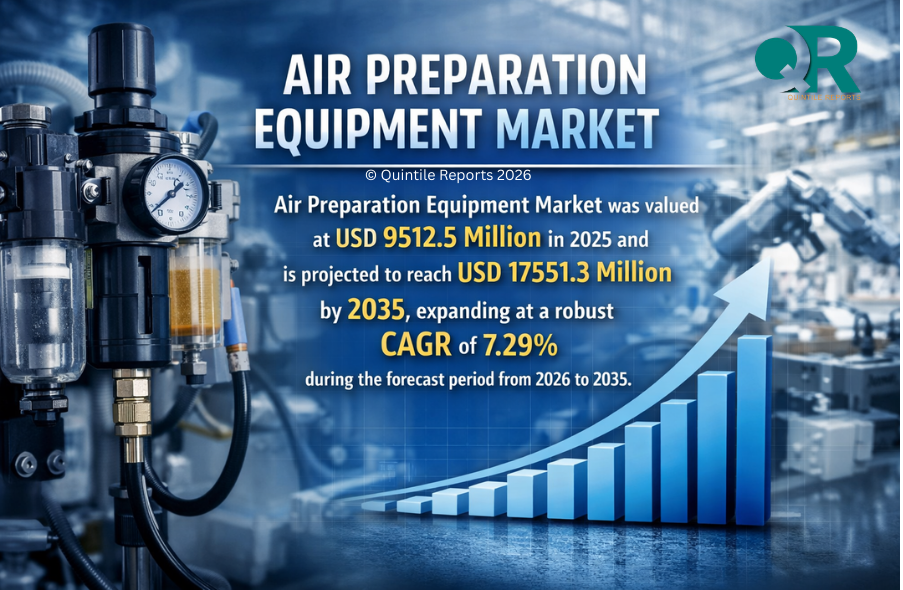
According to recent market research, the Air Preparation Equipment Market was valued at USD 9512.5 Million in 2025 and is projected to reach USD 17551.3 Million by 2035, expanding at a robust CAGR of 7.29% during the forecast period from 2026 to 2035.

The market is benefiting from rising industrial automation, increasing manufacturing activities, and growing demand for energy-efficient compressed air systems across multiple industries.

Free Sample : https://www.quintilereports.com/request-sample/1217-air-preparation-equipment-market/

What is Air Preparation Equipment?

Air preparation equipment refers to devices used to treat compressed air before it enters pneumatic machinery. These systems remove contaminants such as moisture, oil, and dust while maintaining proper air pressure.

Typical air preparation components include:

  • Air filters
  • Pressure regulators
  • Lubricators
  • Filter-Regulator-Lubricator (FRL) systems
  • Air dryers and separators

These devices are essential for maintaining the performance and lifespan of pneumatic equipment used in industrial environments.

Key Market Drivers

Growing Industrial Automation

The expansion of automated manufacturing facilities is significantly increasing demand for pneumatic systems. As a result, industries are investing in advanced air preparation technologies to ensure consistent system performance. This trend is closely linked with the growth of the Industrial Automation Market.

Rising Demand for Compressed Air Efficiency

Compressed air systems account for a large portion of industrial energy consumption. High-quality air preparation equipment improves system efficiency by reducing pressure loss and preventing contamination. This is also influencing the growth of the Compressed Air Systems Market.

Increasing Adoption of Pneumatic Systems

Pneumatic systems are widely used in assembly lines, packaging machinery, and manufacturing operations. The expansion of these applications is contributing to the growth of the Pneumatic Systems Market worldwide.

Growth in Smart Manufacturing

Industries are increasingly integrating digital monitoring and smart sensors into compressed air systems. This development aligns with the expansion of the Smart Manufacturing Market, where intelligent systems improve operational efficiency and predictive maintenance.

Market Segmentation

The Air Preparation Equipment Market can be categorized based on product type, application, and end-user industries.

By Product Type

  • Filters
  • Regulators
  • Lubricators
  • Filter-Regulator-Lubricator (FRL) units
  • Air dryers and separators

These components ensure that compressed air remains free from contaminants and operates at optimal pressure levels.

By Application

  • Manufacturing automation
  • Industrial processing systems
  • Pneumatic machinery
  • Assembly line equipment

These applications are increasingly integrated into factory automation systems, contributing to the growth of the Factory Automation Market.

By End-User Industry

  • Automotive
  • Aerospace
  • Electronics
  • Food & beverage
  • Pharmaceuticals
  • Energy & utilities

The automotive industry, in particular, uses compressed air systems extensively in manufacturing plants, which aligns with growth in the Industrial Equipment Market.

Regional Market Insights

North America

North America remains a key market due to the presence of advanced manufacturing infrastructure and widespread adoption of automation technologies.

Europe

European industries focus heavily on energy efficiency and sustainable manufacturing practices, which is increasing demand for advanced filtration systems. This trend also supports growth in the Industrial Filtration Market.

Asia-Pacific

Asia-Pacific is expected to experience the fastest growth due to rapid industrialization in countries such as China, India, Japan, and South Korea. Expanding manufacturing operations are also contributing to growth in the Air Compressor Market.

Middle East and Latin America

These regions are witnessing gradual growth due to increasing industrial investments and infrastructure development.

Latest Blog : https://www.researcheditorial.com/news/surgical-helmet-market/

Emerging Technology Trends

Several innovations are shaping the future of the air preparation equipment industry:

  • IoT-enabled compressed air monitoring
  • Smart pneumatic control systems
  • Advanced filtration technologies
  • Compact modular air preparation units
  • Predictive maintenance solutions

Many of these developments rely on intelligent sensing technologies, which are closely related to growth in the Industrial Sensors Market.

Competitive Landscape

The global Air Preparation Equipment Market includes several major manufacturers focusing on product innovation and strategic expansion. Companies are developing high-efficiency filtration systems and integrated air preparation units to improve industrial productivity.

Key strategies adopted by market players include:

  • Product innovation
  • Strategic collaborations
  • Expansion into emerging markets
  • Development of smart pneumatic solutions

Future Outlook

The demand for air preparation equipment is expected to grow steadily over the next decade as industries continue to adopt automation technologies and energy-efficient manufacturing practices.

With increasing investments in digital manufacturing infrastructure and advanced compressed air systems, the global market is likely to witness significant technological advancements and new growth opportunities.

Get the Full Market Research Report

For deeper insights including market segmentation, competitive analysis, company profiles, and regional forecasts, access the complete report.

👉 Air Preparation Equipment Market – Global Industry Analysis and Forecast to 2035 https://www.quintilereports.com/industry-report/1217-air-preparation-equipment-market/

LinkedIn Article : https://www.linkedin.com/pulse/air-preparation-equipment-market-growth-industry-trends-kirti-narayan-gsxdc

Temperature Control Unit Market 2025–2035: Key Trends, Growth Drivers & Future Outlook

Temperature Control Units (TCUs) play an essential role in maintaining precise thermal conditions across a wide range of industrial operations. Whether it’s plastic molding, chemical processing, pharmaceutical production, food manufacturing, or high-precision machining — temperature consistency directly affects product quality, operational safety, and energy efficiency.

As industries continue shifting toward automation, smarter manufacturing techniques, and energy-efficient systems, the Temperature Control Unit Market is entering an important growth phase. This blog explores the major trends, drivers, opportunities, and future direction of the global TCU industry.

👉 Looking for the full Temperature Control Unit Market sample report?

Click here to Download the Sample

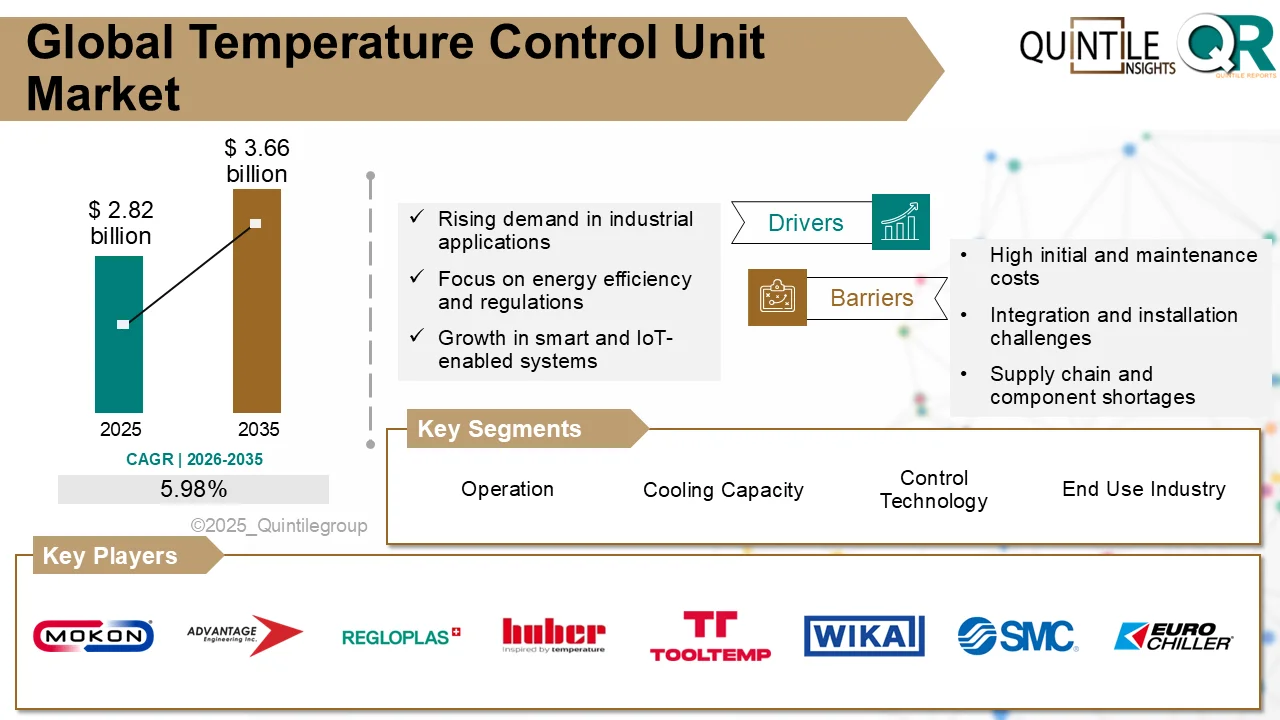
The Global Temperature Control Unit Market was estimated at USD 2.82 billion in 2025 and is projected to reach USD 3.66 billion by 2035, reflecting a robust CAGR of 5.98% over the forecast period from 2026 to 2035. The Temperature Control Unit market report offers a comprehensive and nuanced view of the industry, moving beyond conventional analysis. It provides a thorough examination of the markets dynamics, encompassing a detailed exploration of the factors propelling growth, such as evolving economic conditions, advancements in technology, shifts in regulatory policies, and changes in consumer behavior. Furthermore, the report discusses the projected Compound Annual Growth Rate (CAGR), providing stakeholders with a clear understanding of the market’s expected growth trajectory and offering data-driven insights into future market dynamics.

What is a Temperature Control Unit (TCU)?

A Temperature Control Unit is an industrial device designed to regulate and maintain a stable temperature during production processes. It uses heating or cooling mechanisms to ensure the correct thermal environment for machinery, molds, reactors, or production lines.

Common applications include:

  • Plastics injection molding
  • Pharmaceutical & biotech production
  • Food & beverage processing
  • Chemical reactors and blending operations
  • Oil & gas pipelines
  • Die casting, metalworking, and surface finishing

As industries demand more accuracy and efficiency, TCUs are becoming more advanced, automated, compact, and energy-optimized.

Market Outlook (2025–2035)

While exact numbers vary across research sources, analysts widely agree that the Temperature Control Unit Market is expected to grow steadily over the next decade.

Several factors contribute to this positive outlook:

  • Rising use of automated production systems
  • Increased adoption of smart manufacturing
  • Need for stable thermal control in high-precision industries
  • Growth in pharmaceutical and chemicals sectors
  • Expansion of manufacturing units in Asia, South America, and Eastern Europe

The long-term outlook remains strong, with TCU manufacturers focusing on innovation, efficiency, and sustainability.

💰 Want an exclusive discount on this report?

Click here to get your discount

Key Growth Drivers in the Temperature Control Unit Market

1. Industrial Automation & Smart Factories

Industries worldwide are shifting toward fully automated and sensor-driven production systems. TCUs today are integrated with:

  • IoT-based monitoring
  • Remote operation systems
  • Predictive maintenance algorithms
  • Smart alarms and safety controls

This enhances productivity and minimizes equipment downtime.

2. Demand for Energy-Efficient Solutions

Energy cost reduction is a top priority for manufacturing companies. Modern TCUs are designed to:

  • Reduce power consumption
  • Optimize heating/cooling cycles
  • Use eco-friendly refrigerants
  • Improve thermal efficiency

Manufacturers with sustainable designs are gaining strong market traction.

3. Temperature-Critical Industries Are Expanding

Sectors that depend heavily on heat control—pharma, chemicals, food processing, semiconductors, and plastics—are experiencing rapid growth.

More production means higher demand for reliable TCUs.

4. Tightening Quality & Safety Regulations

Government and international bodies are enforcing strict controls over temperature-sensitive manufacturing environments. This increases the adoption of:

  • Precision temperature controllers
  • High-accuracy sensors
  • Automated compliance monitoring

Industries aiming to meet regulatory standards increasingly invest in advanced TCUs.

Market Segmentation Overview

To understand the market better, here’s how TCUs are typically segmented:

Key Players Operating in the Temperature Control Unit Market are as follows:


Based on Operation, the Temperature Control Unit market is segmented into:

  • Automatic
  • Semi-Automatic
  • Manual

Based on Cooling Capacity, the Temperature Control Unit market is segmented into:

  • Up to 40 kW
  • 4080 kW
  • Above 80 kW

Based on End Use Industry, the Temperature Control Unit market is segmented into:

  • Plastics
  • Food & Beverage
  • Pharmaceuticals
  • Chemicals
  • Automotive
  • Oil & Gas
  • Printing
  • Die Casting
  • Others

Based on Temperature Range, the Temperature Control Unit market is segmented into:

  • Up to 100C
  • 100200C
  • Above 200C

Based on Pump Type, the Temperature Control Unit market is segmented into:

  • Centrifugal
  • Gear
  • Screw
  • Others

Challenges in the Temperature Control Unit Market

Despite growth, industries still face several challenges:

1. High Upfront Cost

Advanced TCUs with smart sensors and automation systems are more expensive, which may limit adoption among small manufacturers.

2. Skilled Workforce Requirements

Operating and maintaining TCUs requires technical knowledge, especially for advanced digital units.

3. Maintenance & Downtime Risks

If not monitored properly, temperature fluctuations can affect product quality and lead to operational delays.

4. Customization Needs

Different industries require different temperature ranges, coatings, materials, and control systems — making customization essential but costly.

Emerging Trends: What to Expect Next

1. IoT-Enabled & Connected TCUs

Smart TCUs with real-time monitoring and cloud analytics will become standard in modern factories.

2. Miniaturized & Modular Units

Compact, plug-and-play units are increasingly preferred for space-constrained industries.

3. Eco-Friendly Refrigerants & Green Standards

Environmental regulations are pushing manufacturers toward zero-emission systems.

4. High-Precision Cooling for Electronics

As electronics and semiconductor industries expand, precise micro-cooling TCUs will gain popularity.

5. Custom-Designed TCUs for Niche Applications

Industries such as 3D printing, biotech labs, and specialty chemicals require tailor-made TCUs with advanced features.

Why This Market Matters for Investors & Manufacturers

  • Steady global demand ensures long-term revenue.
  • Increasing regulatory compliance makes TCUs essential equipment.
  • Rising automation and smart manufacturing boosts advanced TCU adoption.
  • Growth in pharma, chemicals, plastics, and electronics creates continuous industry need.

Businesses in these sectors can significantly benefit by upgrading to modern, efficient, data-driven temperature control systems.

Key Reasons to Acquire the Temperature Control Unit Market Research Report:
  • This report offers a comprehensive analysis of the Temperature Control Unit market from 2017 to 2035, including market segments, current trends, estimations, and dynamics
  • It also provides information on key drivers, restraints, and opportunities
  • Porter’s five forces analysis is used to assess the potency of buyers and suppliers, helping stakeholders make profit-oriented business decisions and strengthen their supplier-buyer network
  • The report includes an in-depth analysis of the Temperature Control Unit market segmentation to identify prevailing market opportunities
  • Major countries in each region are mapped according to their revenue contribution to the global market
  • Market player positioning is also analyzed to facilitate benchmarking and provide a clear understanding of the present position of the market players
  • The report includes an analysis of the regional and global Temperature Control Unit market trends, key players, market segments, application areas, and market growth strategies

Conclusion

The Temperature Control Unit Market is entering a transformative period shaped by automation, energy efficiency, and industrial expansion. The next decade will see TCUs becoming smarter, more sustainable, more precise, and deeply integrated into digital manufacturing ecosystems.

Manufacturers that prioritize innovation—and industries that upgrade to modern TCUs—will be better positioned to improve product quality, reduce operational costs, and achieve regulatory compliance.

If your company operates in plastics, food processing, chemicals, pharma, or any temperature-sensitive field, modernizing your TCU systems is no longer optional — it’s a strategic advantage.

Exit mobile version