


Introduction
The global shift toward sustainability is reshaping industries at an unprecedented pace, and the plastics sector is no exception. Among the most promising developments is the rapid expansion of the recycled polyolefin market, which is transforming how businesses approach materials, production, and environmental responsibility.
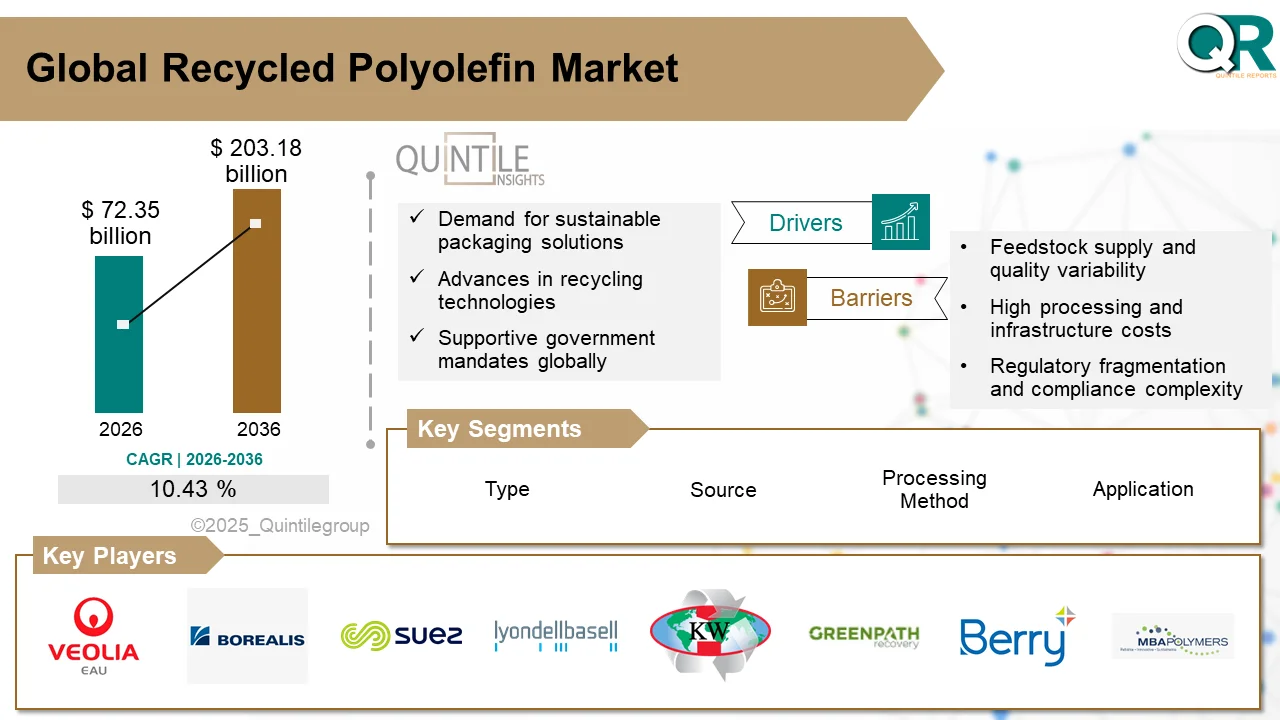
Valued at USD 72.35 billion in 2026, the recycled polyolefin market is projected to reach USD 203.18 billion by 2036, growing at a robust CAGR of 10.43%. This growth is fueled by increasing environmental awareness, government regulations, and advancements in recycling technologies.
In this comprehensive guide, we will explore market trends, growth drivers, challenges, opportunities, and future outlook—helping businesses, investors, and stakeholders make informed decisions.
Download Free Sample PDF of the Report : https://www.quintilereports.com/request-sample/1290-recycled-polyolefin-market/
What Are Recycled Polyolefins?
Polyolefins are a group of polymers that include polyethylene (PE) and polypropylene (PP)—two of the most widely used plastics in the world. These materials are commonly found in packaging, automotive components, construction materials, and everyday consumer goods.
Recycled polyolefins are produced by processing plastic waste through advanced recycling techniques such as sorting, cleaning, melting, and re-extrusion. These materials provide similar functionality to virgin plastics while significantly reducing environmental impact.
Key Benefits:
- Reduction in plastic waste
- Lower carbon footprint
- Cost-effective material usage in the long term
- Support for circular economy initiatives
Market Overview
The recycled polyolefin market is experiencing strong growth due to rising demand across multiple industries. Companies are increasingly incorporating recycled materials into their production processes to meet sustainability targets and regulatory requirements.
Market Highlights:
- Market Size (2026): USD 72.35 Billion
- Market Forecast (2036): USD 203.18 Billion
- CAGR (2026–2036): 10.43%
- Fastest-Growing Regions: Asia-Pacific
- Key Applications: Packaging, Automotive, Construction
Latest Blog : https://www.researcheditorial.com/news/geothermal-heat-pumps-market/
Key Market Drivers
1. Rising Demand for Sustainable Materials
Consumers are becoming more environmentally conscious, leading to increased demand for eco-friendly products. Brands are responding by adopting recycled polyolefins in packaging and product design.
2. Government Regulations and Policies
Governments worldwide are implementing strict regulations to reduce plastic waste. Policies mandating recycled content in packaging are significantly boosting market demand.
3. Technological Advancements
Innovations in recycling technologies, including chemical recycling and improved mechanical processes, are enhancing the quality and usability of recycled polyolefins.
4. Corporate ESG Commitments
Organizations are aligning with Environmental, Social, and Governance (ESG) goals. Using recycled materials helps companies reduce emissions and improve sustainability performance.
LinkedIn Article : https://www.linkedin.com/pulse/recycled-polyolefin-market-set-surge-203b-2036-104-cagr-kirti-narayan-tu2kc
Market Challenges
Despite its growth potential, the recycled polyolefin market faces several challenges:
Quality Variability
Recycled plastics may vary in quality depending on the source and processing methods.
Supply Chain Constraints
Limited availability of high-quality recyclable materials can impact production.
Cost Factors
In some regions, recycled polyolefins may be more expensive than virgin plastics.
Emerging Opportunities
Chemical Recycling
Chemical recycling is revolutionizing the industry by enabling plastics to be broken down into their original components and reused without quality degradation.
Expansion in Automotive Sector
The automotive industry is increasingly using recycled plastics to reduce vehicle weight and improve fuel efficiency.
Growth in Construction Industry
Recycled polyolefins are being used in pipes, insulation, and building materials, supporting sustainable construction practices.
Regional Analysis
Asia-Pacific
Asia-Pacific dominates the market due to rapid industrialization and high consumption of plastics. Countries like China and India are investing heavily in recycling infrastructure.
North America
North America is witnessing steady growth, supported by strong regulatory frameworks and increasing corporate sustainability initiatives.
Europe
Europe leads in sustainability, with strict environmental regulations and high adoption of recycled materials.
Rest of the World
Emerging economies are gradually adopting recycling practices, creating new growth opportunities.
Regional Analysis
Asia-Pacific
Asia-Pacific dominates the market due to rapid industrialization and high consumption of plastics. Countries like China and India are investing heavily in recycling infrastructure.
North America
North America is witnessing steady growth, supported by strong regulatory frameworks and increasing corporate sustainability initiatives.
Europe
Europe leads in sustainability, with strict environmental regulations and high adoption of recycled materials.
Rest of the World
Emerging economies are gradually adopting recycling practices, creating new growth opportunities.
Future Trends Shaping the Market
Circular Economy Integration
Companies are shifting toward closed-loop systems where materials are reused continuously.
Digitalization and AI
AI-powered sorting technologies are improving recycling efficiency and reducing contamination.
Strategic Partnerships
Collaborations between governments, manufacturers, and recyclers are accelerating innovation and market growth.
Competitive Landscape
The recycled polyolefin market is highly competitive, with companies focusing on:
- Expanding recycling capacity
- Investing in R&D
- Forming strategic alliances
- Developing high-quality recycled materials
Why This Market Matters for Businesses
The shift toward recycled polyolefins is not just about sustainability—it’s about business growth and competitive advantage. Companies that adopt recycled materials can:
- Enhance brand reputation
- Meet regulatory requirements
- Reduce environmental impact
- Attract eco-conscious consumers
Conclusion
The recycled polyolefin market represents a significant opportunity for industries worldwide. With strong growth projections, increasing demand for sustainable materials, and continuous technological advancements, the market is set to transform the global plastics industry.
From USD 72.35 billion in 2026 to USD 203.18 billion by 2036, this growth story highlights the importance of innovation, sustainability, and collaboration. Businesses that embrace this shift today will be well-positioned to lead in the future of sustainable manufacturing.
🚀 Stay Ahead in the Sustainable Plastics Revolution
Gain a competitive edge with in-depth insights, market forecasts, and strategic analysis.
👉 Access the full Recycled Polyolefin Market Report (2026–2036) now:
https://www.quintilereports.com/request-sample/1290-recycled-polyolefin-market/
❓ Frequently Asked Questions (FAQs)
1. What is the recycled polyolefin market?
The recycled polyolefin market involves the production and use of recycled plastics such as polyethylene (PE) and polypropylene (PP), derived from post-consumer and post-industrial waste for sustainable applications.
2. What is the size of the recycled polyolefin market?
The market was valued at USD 72.35 billion in 2026 and is projected to reach USD 203.18 billion by 2036, growing at a CAGR of 10.43%.
3. What are the key drivers of the recycled polyolefin market?
Key drivers include increasing demand for sustainable materials, government regulations on plastic waste, technological advancements in recycling, and corporate ESG initiatives.
4. Which industries use recycled polyolefins the most?
Major industries include packaging, automotive, construction, and consumer goods, with packaging being the dominant segment.
5. What are the main challenges in the recycled polyolefin market?
Challenges include quality variability, supply chain limitations, and higher costs compared to virgin plastics in some regions.
6. Which region dominates the recycled polyolefin market?
Asia-Pacific leads the market due to rapid industrialization, while North America and Europe show strong growth due to regulations and sustainability initiatives.
7. What are recycled polyolefins used for?
They are used in packaging materials, automotive parts, construction products, and everyday consumer goods.
8. What is the future of the recycled polyolefin market?
The market is expected to grow significantly due to circular economy adoption, advancements in recycling technologies, and increasing global sustainability efforts.
9. How does recycling polyolefins benefit the environment?
Recycling reduces plastic waste, lowers carbon emissions, and decreases reliance on fossil fuels, supporting environmental sustainability.
10. What opportunities exist in this market?
Opportunities include chemical recycling, expansion in automotive and construction sectors, and rising consumer demand for eco-friendly products.