
Flexi Bag Market Size, Share & Forecast 2035: Growth to USD 2.2 Billion at 9.39% CAGR

Introduction: Flexi Bag Market Overview

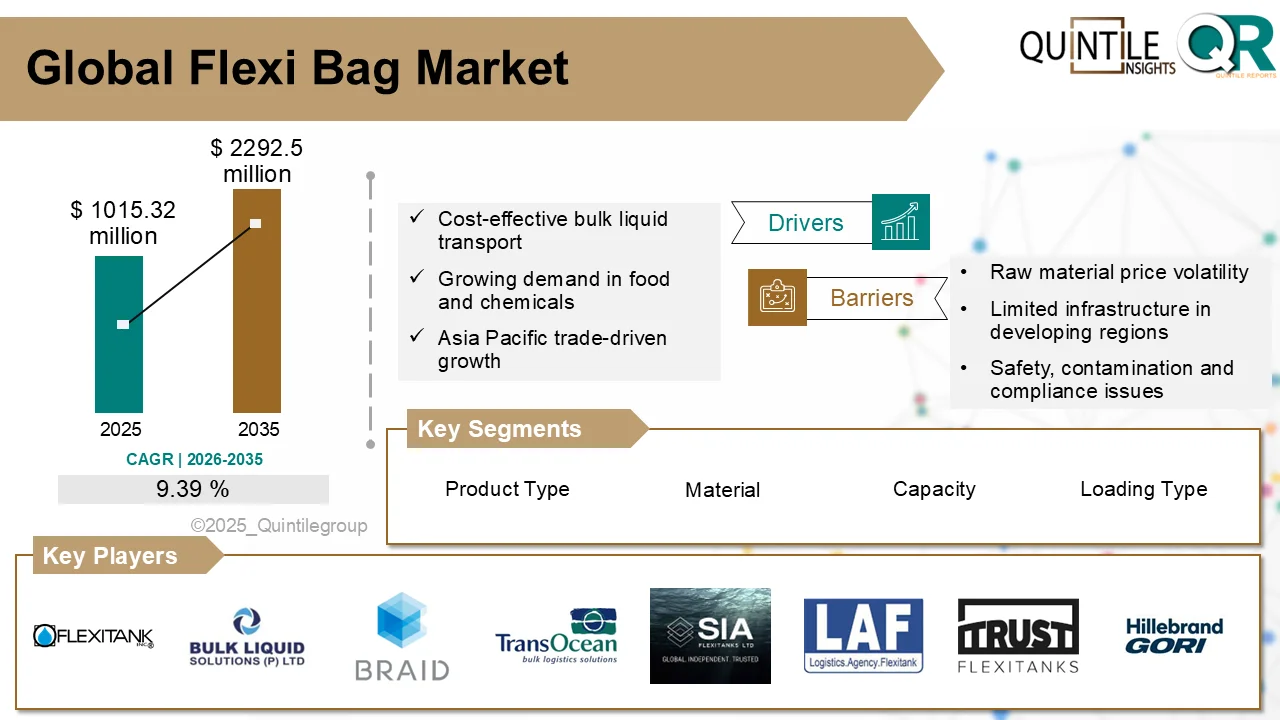
The Flexi Bag Market is witnessing significant growth as industries increasingly demand cost-effective and efficient bulk liquid transportation solutions. Valued at USD 1,015.32 million in 2025, the market is projected to reach USD 2,292.5 million by 2035, growing at a CAGR of 9.39% during the forecast period.

Flexi bags, also known as flexitanks, are transforming global logistics by offering a flexible and economical alternative to traditional packaging methods such as drums and intermediate bulk containers (IBCs). As global trade expands, the Flexi Bag Market continues to gain traction across multiple industries.

Download Free Sample PDF of the Report https://www.quintilereports.com/request-sample/1272-flexi-bag-market/

What is Driving the Flexi Bag Market Growth?

Rising Demand for Cost-Effective Transportation

One of the primary drivers of the Flexi Bag Market is the increasing need for cost-efficient bulk liquid transportation. Flexi bags reduce packaging, handling, and logistics costs, making them a preferred choice for exporters and manufacturers.

Growth in Global Trade and Logistics

The expansion of international trade is significantly contributing to the Flexi Bag Market. With increasing exports of liquid products such as edible oils, chemicals, and beverages, demand for efficient transport solutions is rising.

Sustainability and Eco-Friendly Packaging

Sustainability is a key factor driving the Flexi Bag Market. These solutions generate less waste and reduce carbon emissions compared to traditional packaging methods, aligning with global environmental goals.

Flexi Bag Market Trends

Technological Advancements

The Flexi Bag Market is evolving with advanced multi-layer materials that improve durability, safety, and performance.

Customization and Industry-Specific Solutions

Manufacturers are offering customized flexi bags tailored to specific industries, enhancing efficiency and product safety.

Growing Adoption Across Industries

The Flexi Bag Market is expanding rapidly across food & beverage, chemical, and pharmaceutical sectors, driven by increasing bulk liquid transport needs.

Latest Blog https://www.researcheditorial.com/news/large-scale-bearing-market/

Flexi Bag Market Segmentation

By Product Type

  • Single-layer flexi bags
  • Multi-layer flexi bags
  • Specialized flexitanks

By Application

  • Food & Beverage (edible oils, wine, juices)
  • Chemicals (non-hazardous liquids)
  • Pharmaceuticals
  • Industrial liquids

By Region

  • North America
  • Europe
  • Asia-Pacific
  • Latin America
  • Middle East & Africa

Challenges in the Flexi Bag Market

Despite strong growth, the Flexi Bag Market faces certain challenges:

  • Risk of leakage or contamination
  • Limitations in transporting hazardous materials
  • Regulatory differences across regions

However, ongoing innovations are helping overcome these barriers.

LinkedIn Article : https://www.linkedin.com/pulse/flexi-bag-market-set-double-2035-whats-fueling-939-cagr-kirti-narayan-xxk9c

Future Outlook of the Flexi Bag Market

The future of the Flexi Bag Market looks promising, with increasing adoption driven by cost efficiency, sustainability, and logistics optimization. As industries continue to scale globally, the demand for flexible bulk packaging solutions is expected to rise significantly.

By 2035, the Flexi Bag Market is anticipated to become a USD 2.2 billion industry, creating new opportunities for manufacturers, suppliers, and logistics providers worldwide.

Frequently Asked Questions (FAQs)

What is the Flexi Bag Market?

The Flexi Bag Market refers to the global industry involved in manufacturing and supplying flexible containers used for transporting non-hazardous liquids in bulk.

What is the growth rate of the Flexi Bag Market?

The Flexi Bag Market is expected to grow at a CAGR of 9.39% from 2026 to 2035.

Which industries use flexi bags?

Major industries include food & beverage, chemicals, pharmaceuticals, and industrial manufacturing.

What are the benefits of flexi bags?

Flexi bags offer cost savings, reduced waste, improved efficiency, and eco-friendly logistics solutions.

Conclusion

The Flexi Bag Market is rapidly emerging as a vital component of modern supply chains. With strong growth prospects, increasing global trade, and rising demand for sustainable solutions, the market presents lucrative opportunities for stakeholders.

Call to Action

📊 Looking for in-depth insights into the Flexi Bag Market?

Get access to our comprehensive market research report:

  • Detailed forecasts and trends
  • Competitive landscape analysis
  • Strategic growth opportunities

👉 Contact Quintile Reports™ today to unlock actionable market intelligence and stay ahead of the competition.
Recycled Polyolefin Market to Reach $203.18 Billion by 2036: A Complete Guide to Sustainable Plastics Growth

Introduction

The global shift toward sustainability is reshaping industries at an unprecedented pace, and the plastics sector is no exception. Among the most promising developments is the rapid expansion of the recycled polyolefin market, which is transforming how businesses approach materials, production, and environmental responsibility.

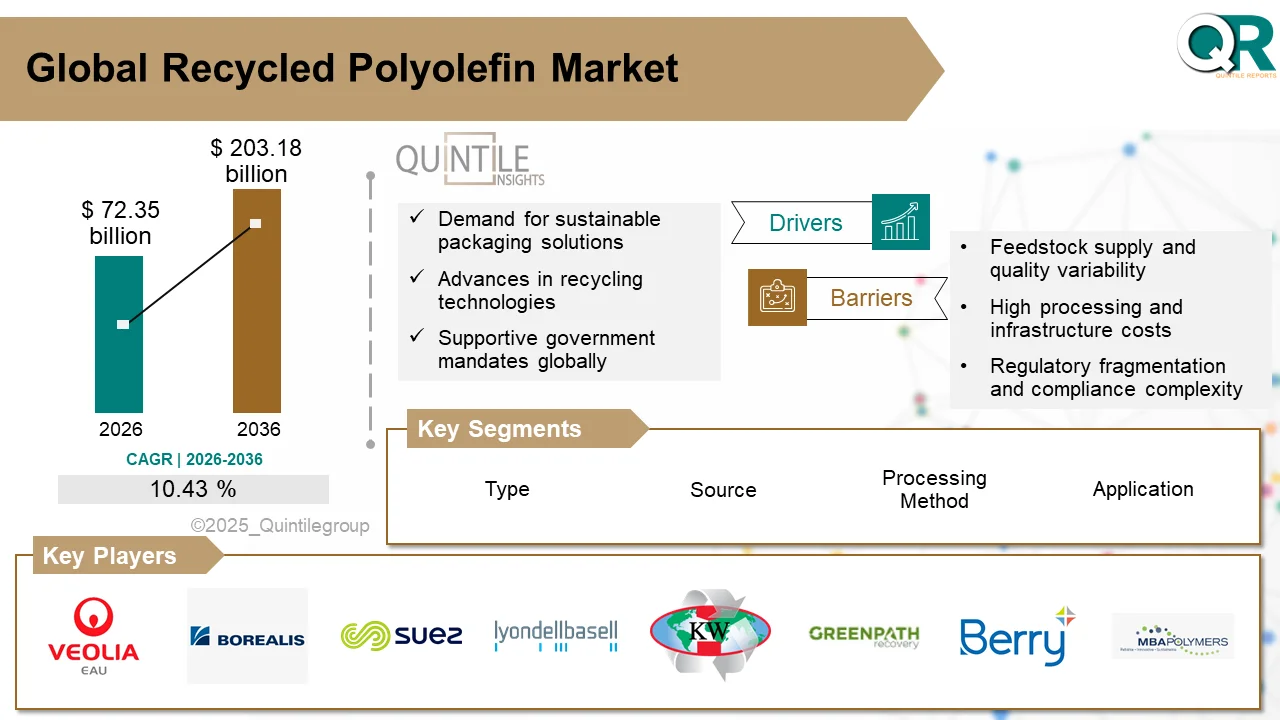
Valued at USD 72.35 billion in 2026, the recycled polyolefin market is projected to reach USD 203.18 billion by 2036, growing at a robust CAGR of 10.43%. This growth is fueled by increasing environmental awareness, government regulations, and advancements in recycling technologies.

In this comprehensive guide, we will explore market trends, growth drivers, challenges, opportunities, and future outlook—helping businesses, investors, and stakeholders make informed decisions.

Download Free Sample PDF of the Report : https://www.quintilereports.com/request-sample/1290-recycled-polyolefin-market/

What Are Recycled Polyolefins?

Polyolefins are a group of polymers that include polyethylene (PE) and polypropylene (PP)—two of the most widely used plastics in the world. These materials are commonly found in packaging, automotive components, construction materials, and everyday consumer goods.

Recycled polyolefins are produced by processing plastic waste through advanced recycling techniques such as sorting, cleaning, melting, and re-extrusion. These materials provide similar functionality to virgin plastics while significantly reducing environmental impact.

Key Benefits:

  • Reduction in plastic waste
  • Lower carbon footprint
  • Cost-effective material usage in the long term
  • Support for circular economy initiatives

Market Overview

The recycled polyolefin market is experiencing strong growth due to rising demand across multiple industries. Companies are increasingly incorporating recycled materials into their production processes to meet sustainability targets and regulatory requirements.

Market Highlights:

  • Market Size (2026): USD 72.35 Billion
  • Market Forecast (2036): USD 203.18 Billion
  • CAGR (2026–2036): 10.43%
  • Fastest-Growing Regions: Asia-Pacific
  • Key Applications: Packaging, Automotive, Construction

Latest Blog : https://www.researcheditorial.com/news/geothermal-heat-pumps-market/

Key Market Drivers

1. Rising Demand for Sustainable Materials

Consumers are becoming more environmentally conscious, leading to increased demand for eco-friendly products. Brands are responding by adopting recycled polyolefins in packaging and product design.

2. Government Regulations and Policies

Governments worldwide are implementing strict regulations to reduce plastic waste. Policies mandating recycled content in packaging are significantly boosting market demand.

3. Technological Advancements

Innovations in recycling technologies, including chemical recycling and improved mechanical processes, are enhancing the quality and usability of recycled polyolefins.

4. Corporate ESG Commitments

Organizations are aligning with Environmental, Social, and Governance (ESG) goals. Using recycled materials helps companies reduce emissions and improve sustainability performance.

LinkedIn Article : https://www.linkedin.com/pulse/recycled-polyolefin-market-set-surge-203b-2036-104-cagr-kirti-narayan-tu2kc

Market Challenges

Despite its growth potential, the recycled polyolefin market faces several challenges:

Quality Variability

Recycled plastics may vary in quality depending on the source and processing methods.

Supply Chain Constraints

Limited availability of high-quality recyclable materials can impact production.

Cost Factors

In some regions, recycled polyolefins may be more expensive than virgin plastics.

Emerging Opportunities

Chemical Recycling

Chemical recycling is revolutionizing the industry by enabling plastics to be broken down into their original components and reused without quality degradation.

Expansion in Automotive Sector

The automotive industry is increasingly using recycled plastics to reduce vehicle weight and improve fuel efficiency.

Growth in Construction Industry

Recycled polyolefins are being used in pipes, insulation, and building materials, supporting sustainable construction practices.

Regional Analysis

Asia-Pacific

Asia-Pacific dominates the market due to rapid industrialization and high consumption of plastics. Countries like China and India are investing heavily in recycling infrastructure.

North America

North America is witnessing steady growth, supported by strong regulatory frameworks and increasing corporate sustainability initiatives.

Europe

Europe leads in sustainability, with strict environmental regulations and high adoption of recycled materials.

Rest of the World

Emerging economies are gradually adopting recycling practices, creating new growth opportunities.

Regional Analysis

Asia-Pacific

Asia-Pacific dominates the market due to rapid industrialization and high consumption of plastics. Countries like China and India are investing heavily in recycling infrastructure.

North America

North America is witnessing steady growth, supported by strong regulatory frameworks and increasing corporate sustainability initiatives.

Europe

Europe leads in sustainability, with strict environmental regulations and high adoption of recycled materials.

Rest of the World

Emerging economies are gradually adopting recycling practices, creating new growth opportunities.

Future Trends Shaping the Market

Circular Economy Integration

Companies are shifting toward closed-loop systems where materials are reused continuously.

Digitalization and AI

AI-powered sorting technologies are improving recycling efficiency and reducing contamination.

Strategic Partnerships

Collaborations between governments, manufacturers, and recyclers are accelerating innovation and market growth.

Competitive Landscape

The recycled polyolefin market is highly competitive, with companies focusing on:

  • Expanding recycling capacity
  • Investing in R&D
  • Forming strategic alliances
  • Developing high-quality recycled materials

Why This Market Matters for Businesses

The shift toward recycled polyolefins is not just about sustainability—it’s about business growth and competitive advantage. Companies that adopt recycled materials can:

  • Enhance brand reputation
  • Meet regulatory requirements
  • Reduce environmental impact
  • Attract eco-conscious consumers

Conclusion

The recycled polyolefin market represents a significant opportunity for industries worldwide. With strong growth projections, increasing demand for sustainable materials, and continuous technological advancements, the market is set to transform the global plastics industry.

From USD 72.35 billion in 2026 to USD 203.18 billion by 2036, this growth story highlights the importance of innovation, sustainability, and collaboration. Businesses that embrace this shift today will be well-positioned to lead in the future of sustainable manufacturing.

🚀 Stay Ahead in the Sustainable Plastics Revolution

Gain a competitive edge with in-depth insights, market forecasts, and strategic analysis.

👉 Access the full Recycled Polyolefin Market Report (2026–2036) now:
https://www.quintilereports.com/request-sample/1290-recycled-polyolefin-market/

❓ Frequently Asked Questions (FAQs)

1. What is the recycled polyolefin market?

The recycled polyolefin market involves the production and use of recycled plastics such as polyethylene (PE) and polypropylene (PP), derived from post-consumer and post-industrial waste for sustainable applications.

2. What is the size of the recycled polyolefin market?

The market was valued at USD 72.35 billion in 2026 and is projected to reach USD 203.18 billion by 2036, growing at a CAGR of 10.43%.

3. What are the key drivers of the recycled polyolefin market?

Key drivers include increasing demand for sustainable materials, government regulations on plastic waste, technological advancements in recycling, and corporate ESG initiatives.

4. Which industries use recycled polyolefins the most?

Major industries include packaging, automotive, construction, and consumer goods, with packaging being the dominant segment.

5. What are the main challenges in the recycled polyolefin market?

Challenges include quality variability, supply chain limitations, and higher costs compared to virgin plastics in some regions.

6. Which region dominates the recycled polyolefin market?

Asia-Pacific leads the market due to rapid industrialization, while North America and Europe show strong growth due to regulations and sustainability initiatives.

7. What are recycled polyolefins used for?

They are used in packaging materials, automotive parts, construction products, and everyday consumer goods.

8. What is the future of the recycled polyolefin market?

The market is expected to grow significantly due to circular economy adoption, advancements in recycling technologies, and increasing global sustainability efforts.

9. How does recycling polyolefins benefit the environment?

Recycling reduces plastic waste, lowers carbon emissions, and decreases reliance on fossil fuels, supporting environmental sustainability.

10. What opportunities exist in this market?

Opportunities include chemical recycling, expansion in automotive and construction sectors, and rising consumer demand for eco-friendly products.

Exit mobile version