
Global Margarine Market Outlook 2036

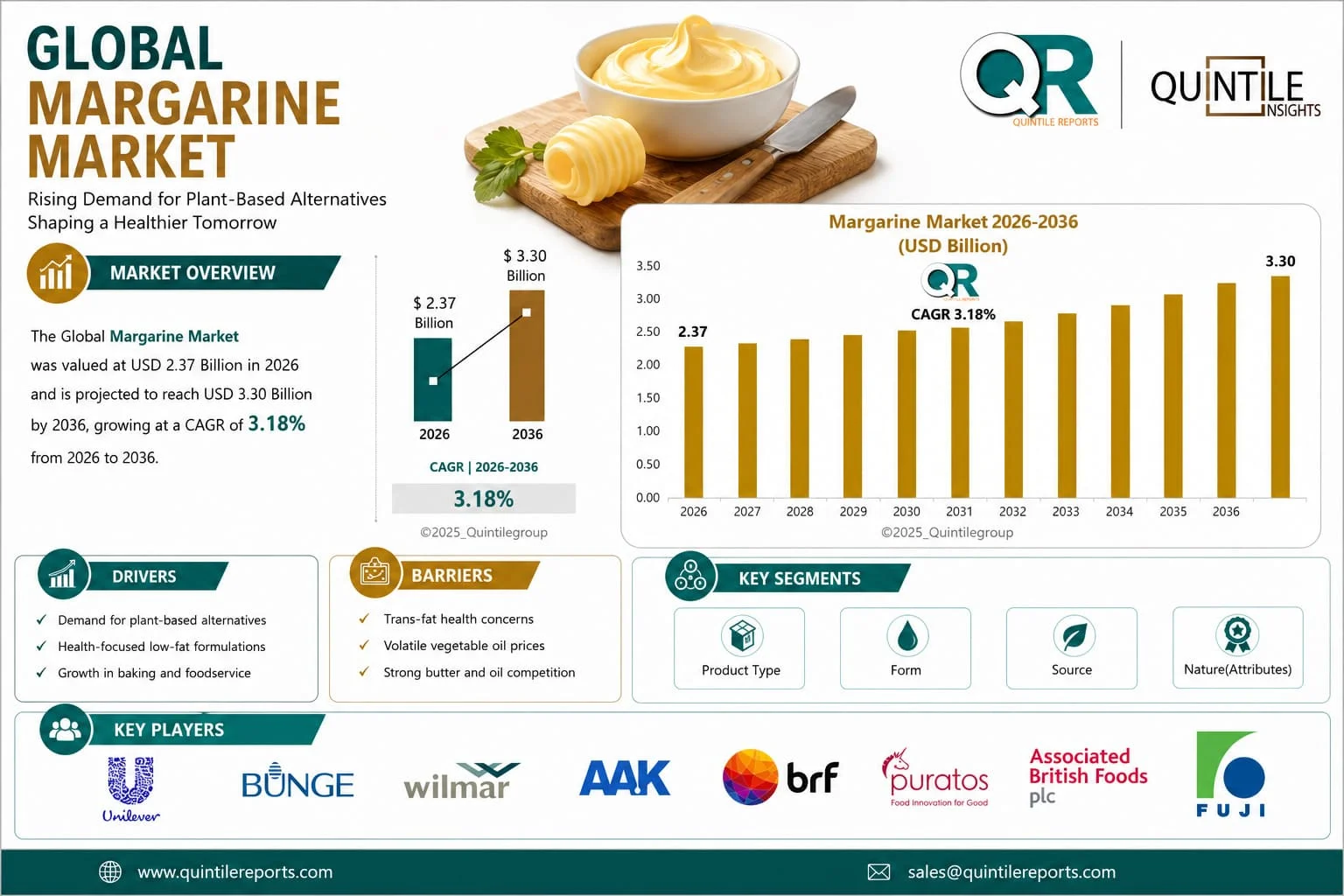
The global margarine market is witnessing stable growth due to rising demand for plant-based food products, expanding bakery applications, and increasing consumer preference for healthier food alternatives. Margarine has evolved from a traditional butter substitute into a modern food ingredient supported by clean-label innovation, trans-fat-free formulations, and functional nutrition benefits.

According to insights from Quintile Reports, the global margarine market is expected to grow steadily through 2036 as manufacturers continue investing in sustainable sourcing, product innovation, and commercial food applications.

Sample Report : https://www.quintilereports.com/request-sample/1300-margarine-market/

Rising Demand for Plant-Based Margarine Products

One of the major factors supporting the growth of the global margarine market is the increasing popularity of plant-based diets and vegan lifestyles. Consumers are actively searching for dairy-free and cholesterol-free alternatives that align with changing health preferences and environmental awareness.

Modern margarine products are commonly produced using vegetable oils such as soybean oil, sunflower oil, rapeseed oil, and canola oil. These products are increasingly promoted as vegan-friendly, lactose-free, and trans-fat-free food options.

The growing adoption of plant-based food products across Europe, North America, and Asia-Pacific is creating strong opportunities for margarine manufacturers and food ingredient suppliers.

Bakery Industry Expansion Supporting Market Growth

Commercial bakery and processed food industries remain important contributors to margarine demand worldwide. Margarine is widely used in cakes, pastries, biscuits, croissants, confectionery products, and ready-to-eat foods because of its affordability, long shelf life, and stable baking performance.

The rapid expansion of urban populations and convenience food consumption is further driving the demand for bakery ingredients and processed food products, especially across emerging economies.

Asia-Pacific is expected to remain one of the fastest-growing regional markets due to rising disposable incomes, expanding retail infrastructure, and increasing consumption of packaged bakery products in countries such as India and China.

Health and Clean-Label Innovation

Manufacturers are increasingly focusing on healthier margarine formulations to improve consumer perception and product quality. Trans-fat-free margarine, low-fat spreads, omega-3 fortified products, and clean-label ingredients are becoming major industry trends.

Consumers are also showing growing interest in sustainable palm oil sourcing, eco-friendly packaging, and non-GMO food products. As a result, leading companies are investing heavily in sustainability initiatives and advanced fat-blend technologies.

Competitive Landscape of the Margarine Market

The global margarine industry includes several multinational companies and regional manufacturers competing through innovation, pricing strategies, sustainability, and distribution strength.

Key players operating in the market include:

  • Bunge Limited
  • Conagra Brands
  • Wilmar International
  • AAK AB
  • Associated British Foods

These companies are focusing on product innovation, clean-label reformulation, sustainable sourcing, and regional expansion to strengthen their market presence.

Future Outlook of the Global Margarine Market

The future of the global margarine market looks promising as consumer demand for plant-based foods, bakery products, and healthier spreads continues rising worldwide. Manufacturers that successfully combine affordability, nutritional value, sustainability, and product innovation are expected to gain a strong competitive advantage over the coming decade.

Growing interest in vegan food products, functional nutrition, and eco-friendly packaging solutions will continue shaping the future of the margarine industry through 2036.

Conclusion

The global margarine market is entering a new phase of growth driven by plant-based food demand, bakery industry expansion, clean-label innovation, and sustainability trends. As consumer preferences continue evolving, margarine manufacturers are investing in healthier formulations and advanced production technologies to remain competitive in the global food industry.

For detailed market insights, trends, competitive analysis, and forecast data, visit Quintile Reports.

FAQs

What is driving growth in the global margarine market?

The market is growing due to rising demand for plant-based food products, bakery industry expansion, vegan diets, and trans-fat-free food alternatives.

Which region is expected to dominate the margarine market?

Asia-Pacific is expected to witness significant growth due to urbanization, rising incomes, and expanding bakery industries.

Why is margarine becoming popular again?

Modern margarine products now focus on clean-label ingredients, healthier formulations, and functional nutrition benefits.

What industries use margarine the most?

Commercial bakery, confectionery, processed food, and foodservice industries are major users of margarine products.

What is the future outlook for the margarine market?

The market is projected to experience stable long-term growth through 2036 driven by plant-based food trends and product innovation.

Clean Label Emulsifiers Market 2026: Trends, Drivers, and Growth Opportunities

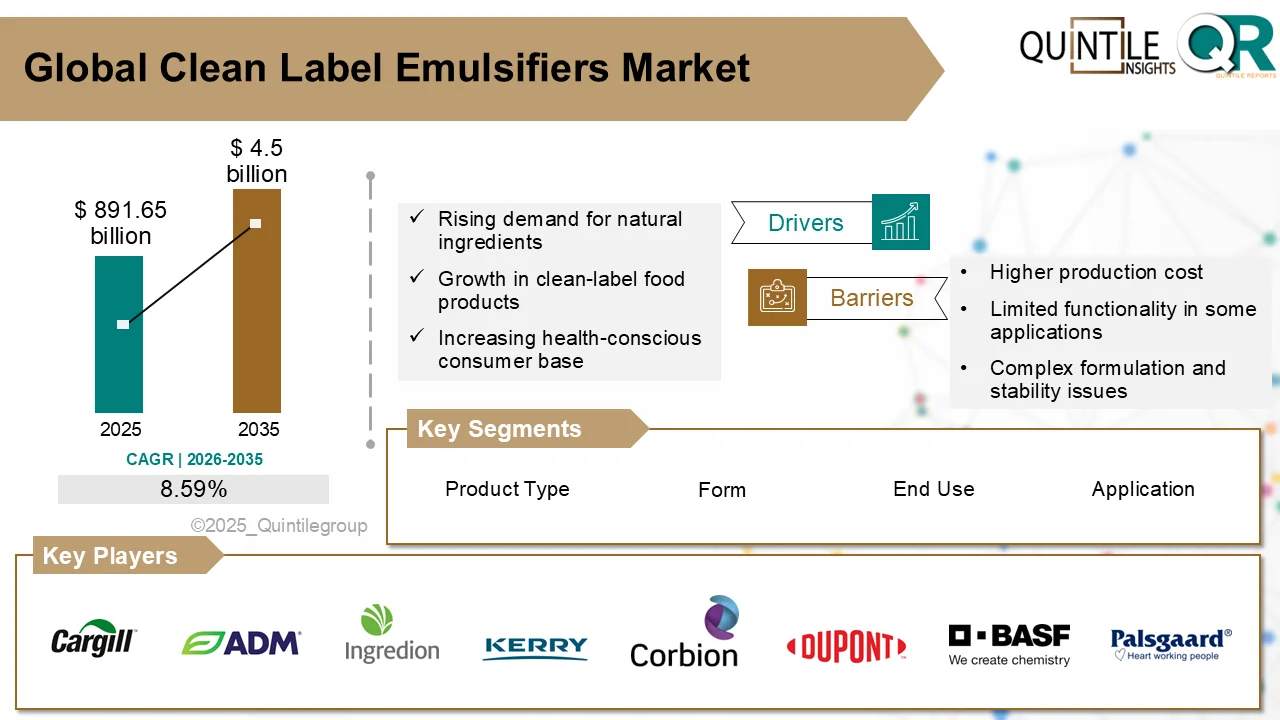
The Clean Label Emulsifiers Market is witnessing rapid growth as consumers increasingly demand natural, minimally processed, and transparent food ingredients. Clean label emulsifiers are derived from natural sources such as lecithin, gums, starches, and proteins and are used to stabilize food products, improve texture, and extend shelf life without synthetic additives. Rising health awareness, clean-label trends, and regulatory support for natural ingredients are driving global adoption across bakery, dairy, beverages, sauces, and confectionery applications.

Key Market Drivers

One of the primary growth drivers is the rising consumer preference for clean-label products. Shoppers are reading labels more closely, favoring foods with natural ingredients and fewer synthetic additives. This trend has compelled food manufacturers to reformulate products using plant-based, non-GMO, and allergen-friendly emulsifiers.

Technological innovation is also boosting market growth. Advanced extraction and processing techniques allow manufacturers to produce high-performance emulsifiers that maintain stability, texture, and flavor while meeting clean-label standards.

Urbanization, increasing disposable income, and the growing convenience food sector are additional drivers. As packaged and ready-to-eat food consumption rises, manufacturers are seeking natural emulsifiers to meet both functional and marketing requirements.

Regional Insights

North America and Europe dominate the market due to high consumer awareness, stringent regulatory standards, and widespread adoption of clean-label foods. Countries such as the U.S., Germany, and France are at the forefront, with strong demand from bakery, dairy, and snack manufacturers.

Asia-Pacific is emerging as the fastest-growing region, driven by rising urban populations, expanding food processing industries, and growing health-conscious consumer segments. Countries like China, India, and Japan are witnessing increasing demand for plant-based, clean-label emulsifiers in baked goods, sauces, and beverages.

Latin America and MEA (Middle East & Africa) are showing steady growth. Market expansion in these regions is supported by modernization of food production, urbanization, and increasing consumer awareness of natural ingredients.

Also read this latest blog :- https://www.researcheditorial.com/news/fortified-dairy-products-market/

Key Players Operating in the Clean Label Emulsifiers Market are as follows:

Based on Application / End Use, the Clean Label Emulsifiers market is segmented into:

  • Food & Beverage
  • Cosmetics & Personal Care
  • Pharmaceuticals
  • Animal Feed
  • Textiles
  • Agriculture
  • Other Industries/Applications

Based on Form, the Clean Label Emulsifiers market is segmented into:

  • Liquid Gel
  • Gel Paste
  • Powder
  • Solid
  • Liquid
  • Other Forms

Based on Product Type, the Clean Label Emulsifiers market is segmented into:

  • Plant-based
  • Animal-based
  • Microbial

Based on Sales Channel / Distribution Channel, the Clean Label Emulsifiers market is segmented into:

  • B2B (Business to Business)
  • B2C (Business to Consumer)
  • Offline
  • Online

Market Trends & Opportunities

  • Plant-Based and Natural Emulsifiers: Products derived from soy, sunflower, lecithin, and starch are gaining popularity due to their clean-label appeal.
  • Functional & Multi-Use Ingredients: Emulsifiers that improve shelf life, texture, and product stability simultaneously are highly sought after.
  • Sustainability & Eco-Friendly Sourcing: Manufacturers focusing on sustainably sourced ingredients and ethical practices are gaining a competitive edge.
  • E-commerce & Specialty Ingredients: Online retail and specialty ingredient suppliers are improving accessibility for small and medium food manufacturers.

Challenges

Despite strong growth, the market faces challenges such as higher production costs of natural emulsifiers compared to synthetic alternatives, functional limitations in certain applications, and compliance with varying regional regulations. Maintaining performance, taste, and shelf stability while adhering to clean-label standards can be technically demanding.

Future Outlook

The Clean Label Emulsifiers Market is expected to maintain strong growth through 2026 and beyond. Increasing consumer preference for natural, safe, and functional ingredients will continue to drive demand across bakery, dairy, beverages, sauces, and confectionery products. Companies focusing on innovation, sustainability, and functional performance are likely to capture significant market share.

As clean-label trends strengthen globally, manufacturers adopting plant-based, allergen-friendly, and eco-conscious emulsifiers will not only meet consumer expectations but also enhance brand credibility and market competitiveness.

About Us : Quintile Reports

Part of LNK Research, Quintile Reports delivers trusted market research and intelligence that empowers businesses to make informed decisions and seize growth opportunities. We transform complex data into actionable insights through comprehensive reports, forecasts, and trend analyses.

With a team of expert analysts, we uncover market trends, patterns, and untapped potential, providing tailored solutions, accurate forecasting, and strategic guidance. Our mission is to turn intelligence into opportunity, helping businesses innovate, grow, and stay ahead in dynamic markets.

Exit mobile version