


Introduction
The global waste management industry is rapidly evolving as cities worldwide invest in smarter, cleaner, and more sustainable infrastructure solutions. One of the fastest-growing technologies transforming urban sanitation is the Automatic Waste Collection System (AWCS). These advanced systems are helping governments, municipalities, and private developers improve waste handling efficiency while supporting smart city and sustainability initiatives.
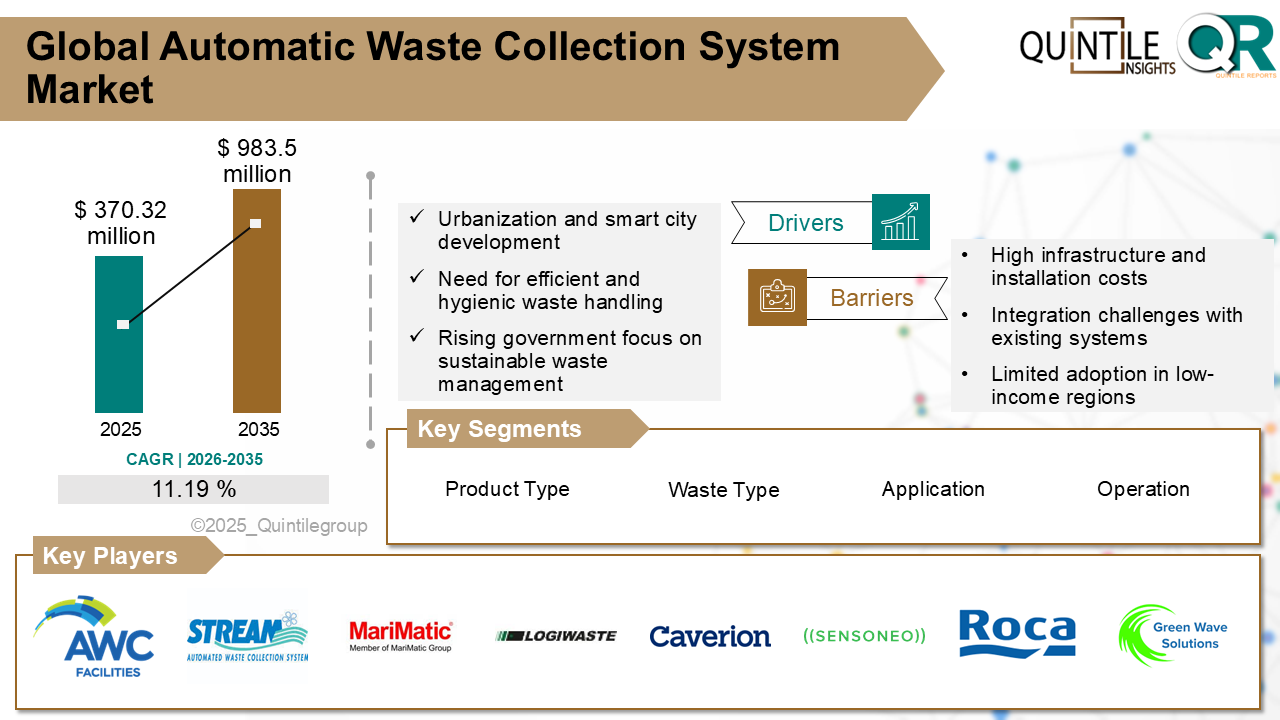
According to recent market analysis, the Global Automatic Waste Collection System Market was valued at USD 370.32 million in 2025 and is projected to reach USD 983.5 million by 2035, registering a CAGR of 11.19% during the forecast period from 2026 to 2035.
The increasing adoption of smart city technologies, rising environmental concerns, and growing demand for automated waste management infrastructure are expected to drive significant market growth over the next decade.
Access the sample report to understand the market structure, segmentation, and key findings : https://www.quintilereports.com/request-sample/1264-automatic-waste-collection-system-market/
What is an Automatic Waste Collection System?
An Automatic Waste Collection System (AWCS) is a vacuum-powered waste management infrastructure that transports waste through underground pipelines from collection points to centralized waste stations. Unlike conventional waste collection methods that rely on trucks and manual labor, AWCS provides a cleaner, safer, and more efficient approach to urban waste handling.
These systems are commonly used in:
- Smart cities
- Hospitals and healthcare facilities
- Airports and metro stations
- Residential complexes
- Commercial buildings
- Educational institutions
- Industrial infrastructure projects
The growing need for hygienic and sustainable waste management solutions is accelerating the adoption of automatic waste collection systems globally.
Automatic Waste Collection System Market Size and Forecast
The Automatic Waste Collection System Market is experiencing strong growth due to increasing investments in urban infrastructure modernization and smart waste management technologies.
Market Highlights
- 2025 Market Size: USD 370.32 Million
- 2035 Projected Market Size: USD 983.5 Million
- CAGR (2026–2035): 11.19%
The market is expected to witness rapid expansion across developed and emerging economies as governments prioritize environmental sustainability and operational efficiency.
Key Drivers of the Automatic Waste Collection System Market
Rising Smart City Investments
Governments across the world are heavily investing in smart city development projects to improve urban infrastructure and quality of life. Automatic waste collection systems are becoming an essential component of modern smart cities because they reduce traffic congestion, improve sanitation, and optimize waste handling operations.
Countries including China, Singapore, the UAE, Saudi Arabia, Germany, and the United States are increasingly adopting smart waste management technologies.
Growing Demand for Sustainable Waste Management
Environmental sustainability is a major growth factor for the Automatic Waste Collection System Market. Traditional waste collection systems contribute significantly to carbon emissions, urban pollution, and fuel consumption.
AWCS solutions help reduce:
- Greenhouse gas emissions
- Noise pollution
- Fuel consumption
- Landfill dependency
- Traffic congestion caused by garbage trucks
As sustainability regulations become stricter worldwide, automated waste collection systems are gaining strong market traction.
Increasing Focus on Public Health and Hygiene
Healthcare facilities, airports, commercial buildings, and densely populated residential complexes require highly hygienic waste disposal systems. Automatic waste collection systems reduce direct human interaction with waste, helping minimize contamination risks and unpleasant odors.
The COVID-19 pandemic further accelerated interest in contactless and automated waste handling solutions.
Integration with Smart Technologies
The integration of:
- Internet of Things (IoT)
- Artificial Intelligence (AI)
- Smart sensors
- Cloud-based monitoring systems
is improving the efficiency and reliability of modern waste collection infrastructure.
Advanced monitoring systems enable real-time waste tracking, predictive maintenance, and optimized waste collection scheduling.
LinkedIn Article : https://www.linkedin.com/pulse/automatic-waste-collection-system-market-expected-reach-kirti-narayan-avlxc
Market Challenges
Despite strong growth potential, the market faces several challenges.
High Initial Infrastructure Costs
Installing underground vacuum pipeline networks and centralized collection systems requires significant capital investment. This remains one of the primary barriers to widespread adoption.
Complex Retrofitting in Existing Cities
Older urban areas often lack the infrastructure flexibility needed for automated waste collection system installation. Most deployments currently occur in newly developed smart cities and infrastructure projects.
Maintenance and Technical Complexity
Automatic waste collection systems require specialized maintenance and technical support. System failures, blockages, or operational disruptions can impact waste collection efficiency in critical environments such as hospitals and airports.
Regional Analysis
Europe Dominates the Market
Europe currently leads the global Automatic Waste Collection System Market due to advanced environmental regulations and strong smart infrastructure development.
Countries such as:
- Sweden
- Germany
- Spain
- Finland
- Netherlands
have widely implemented automated waste collection systems across urban infrastructure projects.
Asia Pacific Emerging as the Fastest-Growing Region
Asia Pacific is expected to witness the highest market growth during the forecast period due to:
- Rapid urbanization
- Government smart city initiatives
- Rising environmental awareness
- Infrastructure modernization projects
Major growth markets include:
- China
- Japan
- South Korea
- Singapore
- India
North America Expanding Smart Waste Infrastructure
The United States and Canada are increasingly exploring smart waste management technologies in:
- Airports
- Hospitals
- Universities
- Residential developments
- Commercial infrastructure projects
Growing investments in sustainable urban development are expected to support market expansion.
Middle East Investing in Smart Urban Projects
Countries such as Saudi Arabia and the United Arab Emirates are integrating AWCS into large-scale smart city and sustainable infrastructure projects.
Mega projects like NEOM are expected to create substantial growth opportunities for automated waste collection technologies.
Competitive Landscape
The Automatic Waste Collection System Market includes global engineering firms, smart infrastructure providers, and waste management technology companies.
Latest Blog : https://www.researcheditorial.com/news/industrial-drone-inspection-market/
Key Players Operating in the Market
- Envac AB
- MariMatic Oy
- Logiwaste AB
- Caverion Corporation
- STREAM Environment Sdn. Bhd.
- MEIKO Group
- Ros Roca Group
- Green Wave Solutions
- AWC Berhad
- Cleantech Civils Pvt. Ltd.
- MetroTaifun
- Europa Co. Ltd.
- Aerbin APS
Leading companies are focusing on:
- Smart monitoring systems
- Energy-efficient vacuum technologies
- Cloud-based waste management platforms
- Strategic partnerships and infrastructure collaborations
Recent Industry Developments
MetroTaifun Expands Residential Waste Collection Infrastructure
In May 2025, MetroTaifun launched its automated waste collection system in the Ranta-Tampella residential neighborhood. The project supports approximately 3,500 residents and handles multiple waste categories including bio waste, mixed waste, paper, and plastic packaging.
Envac North America Renews Healthcare Partnership
In February 2025, Envac North America renewed its partnership with Premier Inc. to improve waste transportation and waste management solutions across healthcare facilities in the United States.
Future Outlook
The future of the Automatic Waste Collection System Market remains highly promising as cities continue prioritizing:
- Smart infrastructure development
- Environmental sustainability
- Urban sanitation modernization
- Automated infrastructure technologies
Technological advancements in IoT-enabled monitoring, AI-driven waste management systems, and smart recycling infrastructure are expected to create new market opportunities through 2035.
As urban populations continue to rise, automated waste collection systems are likely to become a critical component of next-generation smart city ecosystems worldwide.
Frequently Asked Questions (FAQs)
What is an Automatic Waste Collection System?
An Automatic Waste Collection System is a vacuum-based infrastructure that transports waste through underground pipelines to centralized collection stations.
What is driving the Automatic Waste Collection System Market?
Major growth drivers include smart city investments, sustainable waste management initiatives, urbanization, and increasing demand for hygienic automated infrastructure.
Which region dominates the Automatic Waste Collection System Market?
Europe currently dominates the market due to advanced urban infrastructure and strict environmental regulations.
What is the projected market size by 2035?
The market is projected to reach USD 983.5 million by 2035.
Which industries use automatic waste collection systems?
Industries using AWCS include healthcare, airports, transportation infrastructure, residential complexes, educational institutions, hospitality, and commercial infrastructure.
Conclusion
The Global Automatic Waste Collection System Market is entering a significant growth phase driven by smart city investments, technological advancements, and rising environmental awareness.
As governments and infrastructure developers focus on creating cleaner, more efficient, and sustainable urban environments, automated waste collection systems are expected to play a major role in the future of global waste management infrastructure.
Businesses investing in innovative and scalable smart waste management technologies will be well-positioned to capitalize on the growing market opportunities through 2035.
APAC: +91-626-560-6898
US: +91 866-833-9034
Email: sales@quintilereports.com
Website: https://www.quintilereports.com/