
Flax Protein Powder Market Expected to Reach USD 73.96 Billion by 2036
The global Flax Protein Powder Market is experiencing significant growth as consumers increasingly shift toward plant-based nutrition, clean-label food products, and sustainable protein alternatives. Rising awareness regarding health, wellness, digestive nutrition, and functional foods is encouraging food manufacturers and dietary supplement companies to incorporate flax protein powder into a wide range of applications.
Flax protein powder, derived from flaxseeds, is gaining popularity due to its rich nutritional profile that includes plant-based protein, dietary fiber, omega-3 fatty acids, and antioxidants such as lignans. The growing adoption of vegan and flexitarian lifestyles is further accelerating demand for flax protein powder across global markets.
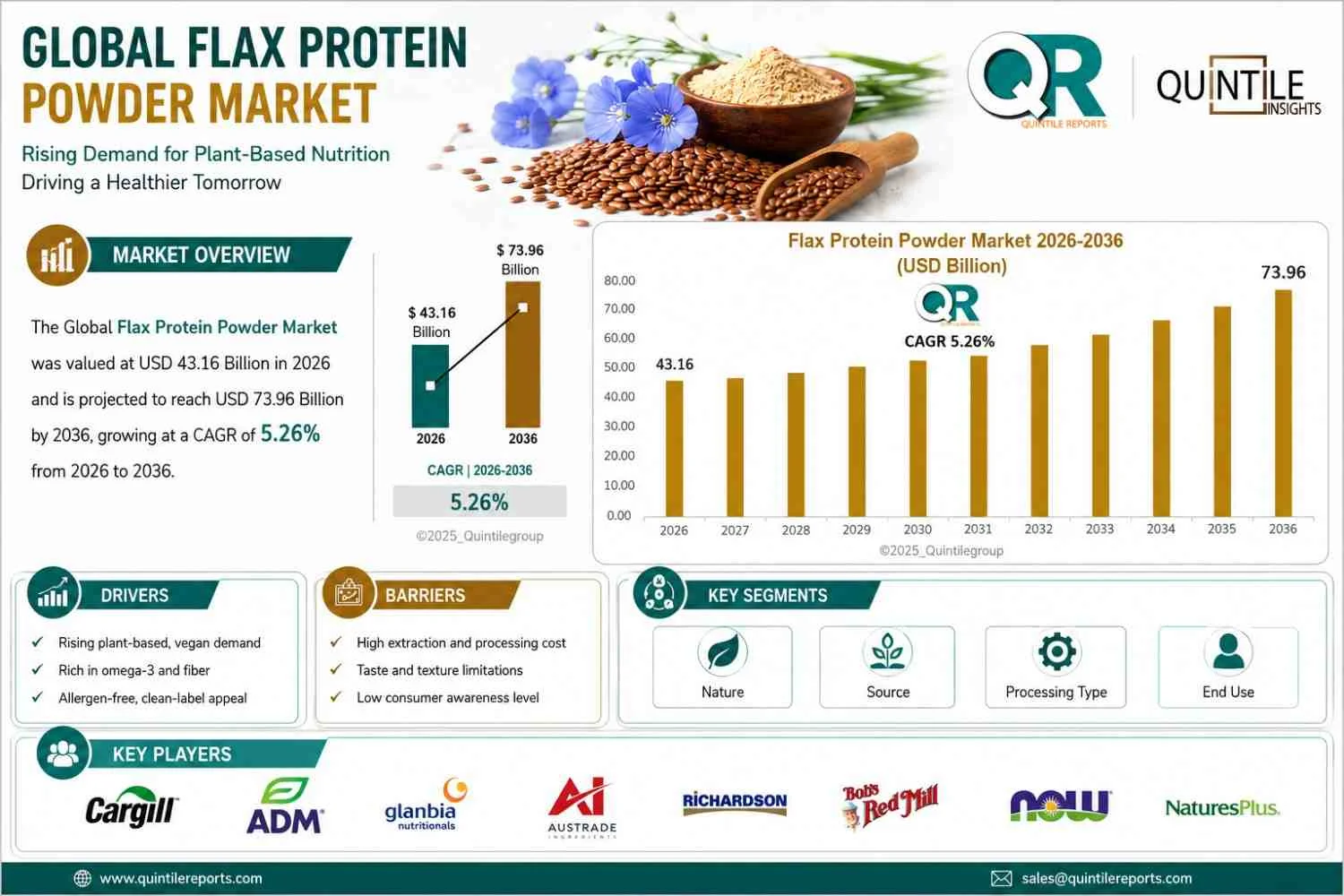
According to Quintile Reports, the global Flax Protein Powder Market was valued at USD 43.16 Billion in 2026 and is projected to reach approximately USD 73.96 Billion by 2036, expanding at a CAGR of 5.26% during the forecast period.
The increasing demand for plant-based protein products, expanding functional food applications, and rising consumer preference for sustainable nutrition solutions are expected to continue driving long-term market growth.
Download Free Sample PDF of the Report https://www.quintilereports.com/request-sample/1299-flax-protein-powder-market/
What is Flax Protein Powder?
Flax protein powder is a plant-based protein ingredient produced from flaxseeds (Linum usitatissimum). The seeds undergo specialized processing methods such as cold pressing, filtration, and enzymatic extraction to remove oil while concentrating protein content.
Unlike conventional protein ingredients, flax protein powder provides a combination of protein, dietary fiber, and healthy fatty acids within a single ingredient. This multifunctional nutritional profile makes it highly attractive for modern health-conscious consumers.
Flax protein powder is commonly marketed as:
- Vegan-friendly
- Non-GMO
- Gluten-free
- Clean-label
- Sustainable
- Allergen-friendly
Its mild nutty flavor and versatile functionality allow manufacturers to use it in smoothies, protein bars, sports nutrition products, dairy alternatives, bakery products, breakfast cereals, and nutritional supplements.
Key Nutritional Benefits of Flax Protein Powder
Rich Source of Plant-Based Protein
Consumers are increasingly seeking alternatives to animal-based proteins due to health, environmental, and ethical concerns. Flax protein powder offers a valuable plant-based protein source suitable for vegans, vegetarians, athletes, and fitness-conscious consumers.
High Dietary Fiber Content
Dietary fiber plays an important role in digestive wellness and weight management. Flax protein powder supports gut health while helping consumers maintain satiety for longer durations.
Omega-3 Fatty Acids
Flaxseeds are naturally rich in alpha-linolenic acid (ALA), a plant-based omega-3 fatty acid associated with heart health and inflammation management.
Presence of Lignans and Antioxidants
Flax contains natural antioxidant compounds known as lignans that contribute additional wellness benefits and strengthen the ingredient’s positioning within functional food applications.
Compatibility With Multiple Diet Trends
Flax protein powder aligns with several dietary preferences including:
- Vegan diets
- Vegetarian nutrition
- Keto-friendly meal plans
- Gluten-free diets
- Clean-label food products
- Plant-based nutrition programs
This broad compatibility significantly increases the ingredient’s consumer appeal.
LinkedIn Article : https://www.linkedin.com/pulse/flax-protein-powder-market-size-reach-usd-7396-billion-kirti-narayan-kkdrc
Flax Protein Powder Market Drivers
Rising Demand for Plant-Based Nutrition
One of the major factors driving the Flax Protein Powder Market is the growing global shift toward plant-based nutrition. Consumers are actively reducing animal protein consumption and adopting sustainable dietary choices.
Plant-based proteins are no longer limited to vegan consumers. Mainstream consumers, fitness enthusiasts, and health-conscious individuals are increasingly exploring plant-derived protein sources.
The growing focus on environmental sustainability and ethical food production is further accelerating demand for flax protein powder.
Expansion of Functional Foods and Beverages
The functional food industry continues to expand rapidly as consumers seek products offering health benefits beyond basic nutrition.
Manufacturers are increasingly using flax protein powder in:
- Protein bars
- Meal replacement beverages
- Smoothies
- Dairy-free products
- Functional snacks
- Bakery products
- Sports nutrition formulations
- Breakfast cereals
Its nutritional value and clean-label positioning make flax protein powder highly attractive for product developers.
Increasing Health and Wellness Awareness
Consumers are paying closer attention to ingredient transparency, nutritional composition, and wellness benefits when making purchasing decisions.
Flax protein powder appeals to consumers seeking products that support:
- Heart health
- Digestive wellness
- Weight management
- Sustainable nutrition
- Overall wellness
This growing health awareness is expected to continue supporting market expansion.
Growth of Vegan and Flexitarian Diets
The rise of veganism and flexitarian lifestyles has significantly increased demand for alternative protein ingredients.
Flexitarian consumers are reducing meat consumption without completely eliminating animal products. This trend is creating strong growth opportunities for plant-based protein manufacturers.
Flax protein powder benefits from this shift because it is perceived as natural, minimally processed, and sustainable.
Product Innovation and Advanced Formulations
Earlier plant-based proteins often struggled with taste and texture limitations. However, advancements in food technology have improved the flavor, texture, and solubility of flax protein powder.
Manufacturers are increasingly investing in:
- Organic product development
- Flavor enhancement technologies
- Blended plant protein formulations
- Ready-to-drink beverages
- Sustainable packaging solutions
- Clean-label innovations
These advancements are helping manufacturers attract mainstream consumers.
Challenges Affecting the Flax Protein Powder Market
High Production Costs
Producing high-quality flax protein powder requires specialized processing technologies such as cold pressing and filtration systems.
Compared to more established plant proteins such as soy and pea protein, flax protein production infrastructure remains relatively limited, leading to higher operational costs.
This may limit product affordability in price-sensitive markets.
Taste and Texture Limitations
Although significant improvements have been made, some flax protein powder products may still exhibit earthy flavors or gritty textures.
Maintaining taste quality while preserving nutritional integrity remains a major challenge for manufacturers.
Competition From Other Plant Proteins
The market also faces strong competition from other plant-based proteins including:
- Soy protein
- Pea protein
- Rice protein
- Hemp protein
- Pumpkin seed protein
Manufacturers must continue innovating to differentiate their products.
Regional Analysis of the Flax Protein Powder Market
North America
North America dominates the Flax Protein Powder Market due to strong demand for plant-based nutrition, sports supplements, and clean-label food products.
The United States continues to witness growing consumer preference for vegan nutrition, wellness products, and functional beverages.
Europe
Europe is experiencing steady market growth driven by sustainability trends, organic food demand, and increasing vegan adoption across Germany, the United Kingdom, and France.
Strict food quality regulations and consumer preference for natural ingredients are supporting regional market expansion.
Asia-Pacific
Asia-Pacific is expected to witness the fastest growth during the forecast period.
Factors supporting regional growth include:
- Urbanization
- Rising disposable income
- Expanding middle-class population
- Increasing health awareness
- Growing interest in plant-based diets
Countries such as China, India, and Japan are becoming major growth markets for plant-based nutrition products.
Latin America and Middle East & Africa
Emerging markets are also experiencing increasing demand for functional nutrition and wellness products due to changing lifestyles and rising consumer awareness.
Latest Blog : https://www.researcheditorial.com/news/water-cut-monitors-market/
Competitive Landscape
The global Flax Protein Powder Market is highly competitive, with companies focusing on innovation, sustainability, and clean-label product positioning.
Key competitive strategies include:
- Organic certifications
- Advanced extraction technologies
- Non-GMO formulations
- Flavor enhancement
- Sustainable sourcing
- Product diversification
Leading companies operating in the market include:
- Cargill, Incorporated
- Archer Daniels Midland Company (ADM)
- Glanbia Nutritionals
- Richardson International
- NOW Foods
- Nutiva
- Garden of Life
- Bob’s Red Mill
- Bioriginal Food & Science Corp.
- Flax USA
Manufacturers are increasingly investing in research and development to improve digestibility, nutritional value, and consumer experience.
Future Outlook of the Flax Protein Powder Market
The future outlook for the Flax Protein Powder Market remains highly positive due to increasing consumer demand for sustainable and plant-based nutrition.
Growing interest in functional foods, wellness-focused lifestyles, and clean-label ingredients is expected to create significant opportunities for manufacturers.
Companies focusing on innovation, transparency, sustainability, and premium product quality are likely to strengthen their competitive positioning in the coming years.
The expanding adoption of vegan and flexitarian diets is expected to continue driving long-term growth across food, beverage, and dietary supplement applications.
Frequently Asked Questions (FAQs)
What is flax protein powder?
Flax protein powder is a plant-based protein ingredient derived from flaxseeds. It contains protein, dietary fiber, omega-3 fatty acids, and antioxidants.
What is driving growth in the Flax Protein Powder Market?
The market is growing due to increasing demand for plant-based nutrition, functional foods, clean-label products, and sustainable protein alternatives.
What is the projected size of the Flax Protein Powder Market by 2036?
The global Flax Protein Powder Market is projected to reach approximately USD 73.96 Billion by 2036.
Which region dominates the Flax Protein Powder Market?
North America currently dominates the market due to strong demand for plant-based foods and sports nutrition products.
Which region is expected to grow the fastest?
Asia-Pacific is expected to record the fastest market growth owing to increasing health awareness and rising plant-based nutrition adoption.
What are the major applications of flax protein powder?
Flax protein powder is widely used in protein bars, smoothies, bakery products, dairy alternatives, sports nutrition products, and dietary supplements.
Conclusion
The global Flax Protein Powder Market is expected to witness steady growth over the next decade as consumers increasingly prioritize plant-based nutrition, sustainable food ingredients, and wellness-focused lifestyles.
Rising demand for clean-label products, expanding functional food applications, and increasing health awareness are expected to continue supporting market expansion.
Manufacturers investing in innovation, advanced processing technologies, and sustainable sourcing practices are likely to benefit from growing market opportunities.
As plant-based nutrition continues to reshape the global food industry, flax protein powder is expected to become an increasingly important ingredient across food, beverage, sports nutrition, and dietary supplement applications.
About Quintile Reports
Quintile Reports is a leading market research and consulting company delivering industry intelligence, strategic insights, competitive analysis, and market forecasts across multiple industries including food & beverages, healthcare, chemicals, technology, energy, and industrial sectors.
For report inquiries, sample requests, and customization:
Email: sales@quintilereports.com
Phone: +91-626-560-6898